Digital Oil Field

This research focuses on combining physics-based expert rules with machine learning to improve the detection of failure-related events in electrical submersible pumps.

A combination of physics principles and machine-learning techniques is used in this work to develop a virtual flowmeter for oil-production optimization in electrical-submersible-pump-lifted oil wells, resulting in reliable generalization.

This paper presents the deployment of an artificial intelligence-enabled autonomous gas lift optimization system, integrating real-time centralized advanced process control with cloud-based analytics to enhance artificial gas lift performance in producer wells.
-
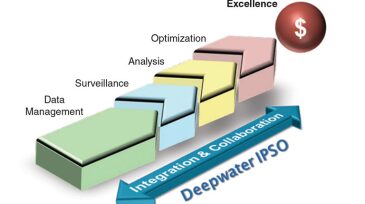
 The complete paper describes some of the technical challenges faced in deepwater operations and the methodology adopted for implementing an integrated production surveillance and optimization (IPSO) system to mitigate the risks.
 -
The papers selected for this issue cover advances and opportunities in well testing. They also apply reservoir fundamentals as well as sound engineering judgment, using quantity but also quality data sets from conventional and unconventional assets.
-
The adoption of emerging technologies is essential for all businesses, and even more important for well-established industries because of the perpetual threat of disruption from competitors.
-
When you think about the Internet of Things, do you think about the extensive global subsea communications network?
-
The digitalization of oil and gas facilities is becoming a new technical arena. Effective solutions can be used to convert data into information and knowledge, which can then be used to improve maintenance operations.
-
With only about 3% of data from industrial assets used for decision making or meaningful purpose, vessel, rig, and fleet owners are looking at ways to connect existing networks and assets to achieve optimized operational performance.
-
Supervisory control and data acquisition systems no longer simply monitor operations and produce large volumes of data in static displays, but now collect production data from all operation data sources and contextualize and present them to workers in real time as meaningful, actionable information.
-
Sensor systems for pipeline inspections from Ingu and Rheidiant are among the initial selections to receive funding under Chevron’s CTV Catalyst Program.
-
Rockwell Automation’s Luis Gamboa explains his company’s new solution designed to allow operators to collect, sort, and reconcile the quality and quantity of data from multiple sources to optimize field data.
-
As E&P companies slowly ramp up drilling and production activities while adjusting to a new period of “lower for longer” prices, the time is right for widespread adoption of the IoT.