Digital Oil Field

This paper presents the large-scale deployment and operational integration of an advanced, automated rheometer in the Ghawar gas field, one of the world’s most prolific and technically complex hydrocarbon developments.

This study demonstrates the transformative potential of physics-informed neural networks as a hybrid framework for multiphase-flow measurement.

The Seismos full-scale research center opens to industry, universities, and national laboratories, advancing acoustic sensing across upstream energy, pipelines, critical infrastructure, and national security.
-
 Having blockchain on an oil rig means everyone on the job shares a view of a project from start to finish. This could facilitate innovations that cut costs, but organizational change is required.
-
The objective of this paper is to illustrate a methodology for identifying the value of information (VOI) in reservoir management—in particular, for deriving the conditional probabilities of success when new and imperfect data are acquired.
-
Initial development of inflow tracers was designed to provide qualitative information about the location of water breakthrough in production wells. The proof of concept and application for water detection initiated the development of oil tracers for oil-inflow monitoring.
-
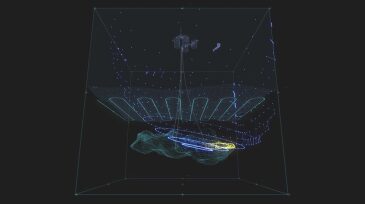
The technology will provide Equinor a continual feed of updated reservoir information from its Johan Castberg and Johan Sverdrup fields with the aim of improving well placement, production, injection, and—ultimately—recovery.
-
A new event is kicking off in September that will bring together the brightest minds in digital tech and oil and gas.
-
Harnessing stranded data will transform operations beyond what existing, siloed software solutions delivered. There is a clear need to be more agile and embrace cloud-based solutions to realize new capabilities.
-
The goal is to support the development and sharing of best-practice approaches for project delivery and asset operations using cloud services and digital workflows in engineering and operations.
-
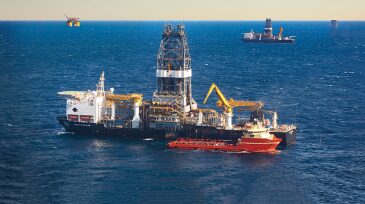
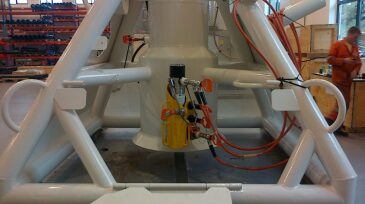
Acquiring data from an abandoned subsea well has been done before, but never quite like this.
-
Wearable computers are turning heads in the oil and gas industry and appear to be on a trajectory for widespread adoption.
-
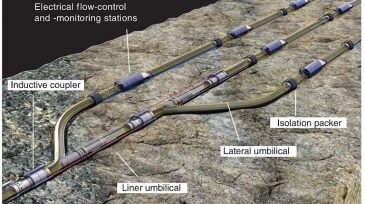
A producer and a service company have collaborated to develop a downhole system to merge multilateral technology and intelligent completions to create “smart laterals.”