Drilling

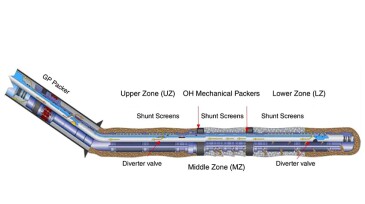
This paper presents the application of degradable particulate-diverter technology to improve oil production by effectively diverting stimulation treatment fluids away from high-water-cut, high-permeability, high-temperature producing intervals or zones.

This case study from ARC Resources and DarkVision outlines the use of acoustic imaging tools in two active fracturing programs in Canada to monitor well casing deformation.

This case study from Tomax outlines the use of artificial intelligence to analyze high-fidelity data of the full drilling process.
-
 The SPE Drilling and Wells Interoperability Standards group proposes a dual-path strategy to overcome the technical and commercial barriers facing the advancement of drilling automation.
-
The latest successful drilling campaign brings Suriname’s discovered resources to over 2.4 billion bbl of oil, according to Wood Mackenzie.
-
The contractor sells rigs and Qatar JV stake to Gulf Drilling International in $338 million deal.
-
Computational fluid dynamics modeling is used to gain better understanding of filter-cake formation in inclined and vertical well drilling operations under elevated temperature and pressure, highlighting the importance of controlling fluid invasion to optimize drilling performance.
-
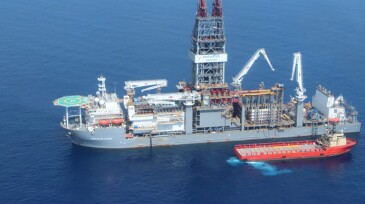
Drillships Deepwater Asgard and Deepwater Atlas have fresh US Gulf Mexico campaigns upcoming that will earn the driller more than $500,000 per day.
-
This paper describes the technical challenges of drilling and running casing in superlaterals in the Vaca Muerta unconventional play.
-
This paper presents the completion strategy implemented in an intelligent well completed in Malaysian deepwater Block K.
-
This paper describes the engineering design and operational execution practices that supported setting of a new extended-reach world record in a mature carbonate field offshore Abu Dhabi.
-
As technology continue to evolve and reservoirs become more challenging to access, the drilling industry is further improving its efficiency and derisking operations through the use of artificial intelligence, lighter and stronger pipes, and sophisticated data analytics.
-
This paper presents laboratory testing and application of a resin-cement system designed to be placed as a tail slurry to provide enhanced mechanical properties compared with a conventional slurry.