Energy transition

The Houston-based energy company's first generating unit has begun producing electricity as it works toward a buildout that could eventually power nearly 1 million US homes.

With funding opportunities improving, developers and researchers are focused on shortening project learning cycles and reducing uncertainty to attract more capital and speed deployment.

The US Department of Energy has awarded more than $99 million to 21 projects that will advance geothermal development through field-scale testing of next-generation technologies and exploration drilling programs across the US.
-
 The authors introduce a novel framework combining dynamic mode decomposition, a data-driven model-reduction technique, with direct data assimilation to streamline the calibration of carbon-dioxide plume evolution models.
 -
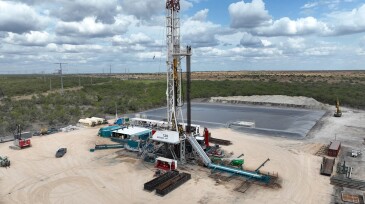
Geothermal systems, which rely on extracting heat from deep within the Earth, face many of the same technical challenges that oil and gas operators have tackled for decades. Geothermal development can be advanced efficiently and economically by applying proven oil and gas technologies.
-
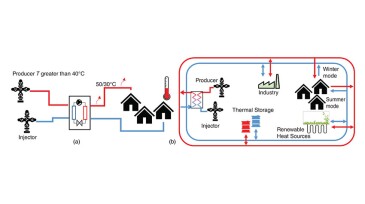
This study highlights how the recovery and reuse of existing hydrocarbon infrastructure can contribute to the diffusion of district-heating projects that implement the principles of the circular economy.
-
The companies have announced they will work together to integrate geothermal well engineering and project delivery globally.
-
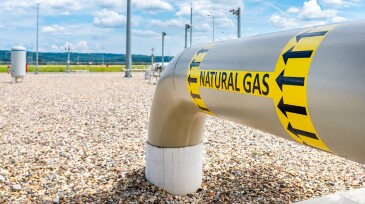
A recent report from Wood Mackenzie highlights the role of natural gas in supporting renewables and reducing emissions.
-
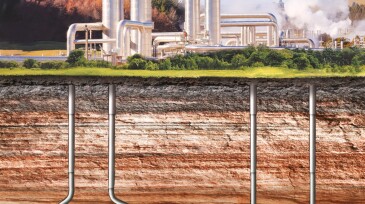
Closed-loop geothermal systems have entered the new-energy arena to generate electricity using the underground as a heat exchanger.
-
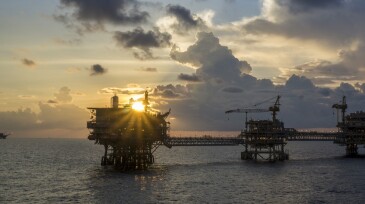
Equinor will reduce investments in renewables over the next 2 years by 50% to $5 billion and will increase its focus on oil and gas production, expecting more than 10% growth from 2024 to 2027.
-
The companies said they plan to work together on developing geopressured geothermal systems for low-carbon energy storage and geothermal power generation.
-
Greenhouse gases are woven into every stage of a well’s life, which presents challenges that demand creative solutions that do not require too much capital.
-
Wood Mackenzie reports that prices would need to rise, capital discipline would need to evolve, and spending would need to increase by 30% for the upstream sector to meet demand in a delayed energy transition scenario.