Energy transition

The Houston-based energy company's first generating unit has begun producing electricity as it works toward a buildout that could eventually power nearly 1 million US homes.

With funding opportunities improving, developers and researchers are focused on shortening project learning cycles and reducing uncertainty to attract more capital and speed deployment.

The US Department of Energy has awarded more than $99 million to 21 projects that will advance geothermal development through field-scale testing of next-generation technologies and exploration drilling programs across the US.
-
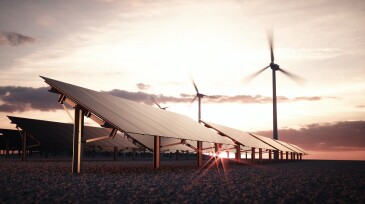
 Wind power keeps rising across the globe, while new solar plant developments light up Louisiana and Texas.
 -
The Advanced Clean Energy Storage project in Utah involves two 4.5-million-bbl salt caverns that will store up to 100 metric tons of hydrogen per day.
-
The government is offering its first major funding for the unexplored energy source.
-
Fervo Energy’s bet that fracturing methods can be used for geothermal power is looking like a winner.
-
The authors’ work states that the qualification approach for offshore hydrogen pipeline systems should include material properties testing under various conditions.
-
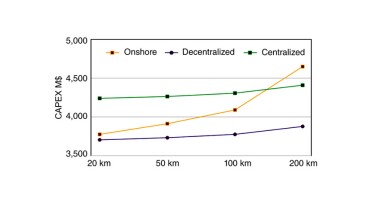
This paper is a summary of a study that covers through-life economics for producing green hydrogen from offshore fixed wind turbines.
-
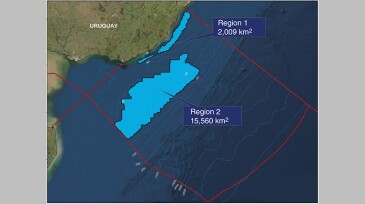
The authors of this paper present the results of an assessment of two regions in Uruguay suitable for bottom-fixed offshore wind technologies.
-
National oil companies and traditional upstream players are progressively focusing on cleaner and more environmentally friendly energy initiatives.
-
Registration is open for the SPE Europe Energy GeoHackathon, which will be held in October and November. It will be preceded by 4-week online bootcamp sessions on data science and geothermal energy, which will begin on 2 October.
-
Occidental has been an investor in the Canadian climate solution firm since 2019.