Enhanced recovery

As Egypt’s largest oil and gas investor, Eni is ramping up its 2026–2027 drilling campaign with new investments cross the Mediterranean offshore, Nile Delta, Western Desert, and offshore Sinai to strengthen the country’s role as a regional gas and LNG export hub.

This paper presents a case study from a mature field redevelopment project where pulsed neutron logging was integrated with advanced reservoir modeling to improve the understanding of fluid-contact dynamics and optimize new horizontal well placement.

This paper aims to showcase examples of how integrated analysis of surveillance data in the Azeri-Chirag-Gunashli field has improved reservoir understanding and informed reservoir-management decisions.
-
 The authors investigate the utility of applying unconventional technology to low- or variably producing carbonate reservoirs to increase estimated ultimate recovery and decrease development-scale variability.
 -
The honor recognizes recipients for their lasting and significant contributions in the field of IOR.
-
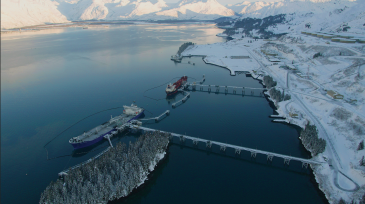
By acquiring Eni’s two producing shallow-water assets, Hilcorp will become the largest offshore oil producer on Alaska’s North Slope.
-
Pilots and papers are plentiful, but the shale sector has no big enhanced oil recovery projects to speak of. It may just have to stay that way for a while.
-
This study proposes a hybrid model that combines the capacitance/resistance model, a machine-learning model, and an oil model to assess and optimize water-alternating-gas (WAG) injectors in a carbonate field.
-
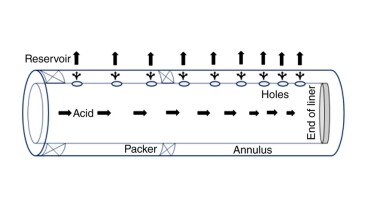
This paper describes the stimulation of a horizontal water-injection well with a limited-entry-liner completion in an onshore carbonate reservoir using a large volume of viscoelastic diverter-acid fluid system ahead of the main acid stage.
-
This study introduces a detailed model to capture the physics and chemistry of acid flow in complex horizontal wells completed in carbonate formations.
-
This paper describes the application of an underbalanced coiled tubing technology in tight sandstones, using an integrative approach that incorporates petrophysical, geophysical, and reservoir engineering data.
-
This paper describes a hydraulic fracturing pilot project using a technique that generates higher fracture conductivity to reduce the drawdown during production and improve connection through laminations.
-
This paper presents a case study of a North African oil field producing from two Ordovician sands with differing permeabilities where significant benefit was achieved by fracture stimulating one or both intervals in two wells.