Enhanced recovery

As Egypt’s largest oil and gas investor, Eni is ramping up its 2026–2027 drilling campaign with new investments cross the Mediterranean offshore, Nile Delta, Western Desert, and offshore Sinai to strengthen the country’s role as a regional gas and LNG export hub.

This paper presents a case study from a mature field redevelopment project where pulsed neutron logging was integrated with advanced reservoir modeling to improve the understanding of fluid-contact dynamics and optimize new horizontal well placement.

This paper aims to showcase examples of how integrated analysis of surveillance data in the Azeri-Chirag-Gunashli field has improved reservoir understanding and informed reservoir-management decisions.
-
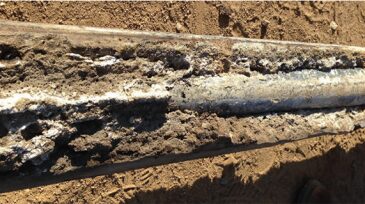
 A horizontal-steam-injection pilot project has been under way for the last 4 years in the Kern River heavy-oil field in the southern San Joaquin Valley of California.
 -
While the floating liquefied-natural-gas (FLNG) option initially looked promising, high capital expenditure and very high operational expense (OPEX) have limited its potential application, with four potential FLNG projects being canceled in Australasia in the last 2 years.
-
Production from an offshore Angola field has been decreasing because of subsea pressure declines amid water-cut increases and limited gas compressor capacity. The development process leading to the selection of high-boosting multiphase pumps is described.
-
Experimentation reveals that swellable nanogels increase their size faster than expected or produce aggregation leading to serious blocking problems at the sandface. This paper studies if the addition of a surfactant can help improve injectivity.
-
Scientists at Locus Bio-Energy Solutions have created a series of nontoxic microbial-based products that substantially increase oil production.
-
Progress in chemical EOR, from polymer to alkaline/surfactant/polymer, has been significant. Not only are there new chemicals with improved recovery capabilities, but also the cost of the chemicals is being reduced continuously. All those factors led to more operators using chemical EOR.
-
In the complete paper, three stages of review have been combined to find out the applicability of the most-feasible improved-oil-recovery (IOR) methods in North American unconventional reservoirs.
-
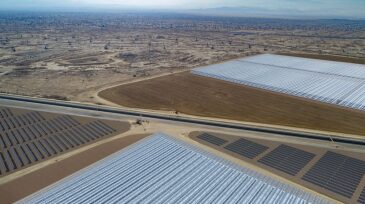
If proven economic, solar EOR technology could represent an environmentally and energy friendly solution for California’s heavy oil producers.
-
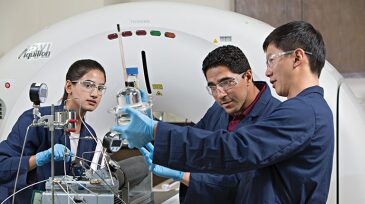
Early field tests suggest chemical treatments may be able to significantly increase production from unconventional formations.
-
The promise of getting 30% more oil production from shale wells has set off a race by companies trying to see if they can replicate what EOG has done. But the big question is: Can it add enough oil to increase the industry’s low average recovery rate?