Environment

TotalEnergies signed off for 30% operated stakes in the Lang Lebah and B14 gas fields offshore Sarawak on the sidelines of ADIPEC in Abu Dhabi, while also highlighting methane-reduction partnerships in Angola, India, and Southeast Asia.

DNV notes that energy and industrial process-related carbon emissions will have dropped by 2050 by only 44% from today’s level, not even halfway to the net-zero pledge envisioned by the Paris climate agreement.

The Absheron gas field expansion will supply additional natural gas to Azerbaijan’s domestic market and support its export commitments to Turkey, allowing Baku to stay focused on meeting its gas export obligations to Europe.
-
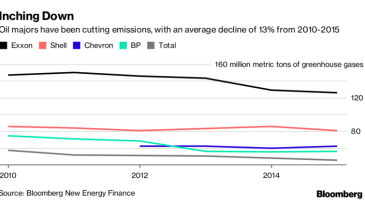
 It’s no secret that oil majors are among the biggest corporate emitters of pollution. What may be surprising is that they’re reducing their greenhouse-gas footprints every year, actively participating in a trend that’s swept up most corporate behemoths.
-
Getting rid of wastewater from onshore wells has become an increasingly costly problem for oil producers as US crude output surged in recent years, especially in the new shale fields from Texas to North Dakota.
-
As companies begin examining facilities in the wake of Hurricane Harvey, commercial drones have become a valuable asset in reaching flooded areas too dangerous for people to reach.
-
San Antonio-based Petro Waste Environmental (PWE) announced the opening of its newest state-of-the-art nonhazardous oil and gas waste landfill facility in Howard County, Texas.
-
Southwest Research Institute is working to improve the accuracy of pipeline leak detection using sensors, artificial intelligence, and deep learning.
-
Natural source zone depletion (NSZD) is the new technical term for naturally occurring biodegradation processes that reduce petroleum, nonaqueous-phase liquids (NAPL) from the subsurface.
-
Colorado Gov. John Hickenlooper has announced a 7-part plan to improve safety, with plugging of orphan wells at the top of the list.
-
An appeals court on 22 August rejected the federal government’s approval of a natural gas pipeline project in the southeastern US, citing concerns about its effect on climate change.
-
The appeals court ruled that, while regrettable, the fact that the spill occurred does not mean that ExxonMobil violated pipeline integrity regulations for risk assessment.
-
A new treaty governing biodiversity and the use of nearly 50% of the world’s oceans is inching closer to realization.