Environment

The Absheron gas field expansion will supply additional natural gas to Azerbaijan’s domestic market and support its export commitments to Turkey, allowing Baku to stay focused on meeting its gas export obligations to Europe.

With millions of wells having been drilled in the US since the beginning of the oil age, the land is pocked with old, unused wellbores. For most, repurposing is a pipe dream. Plugging is the best option.

This guest editorial examines how the most commonly used and cited methane emissions metric can create a misleading picture of upstream gas-handling performance for both the public and industry professionals.
-
 Royal Dutch Shell is changing its tune on carbon, saying it will tie executive pay to shorter-term reductions in emissions.
 -
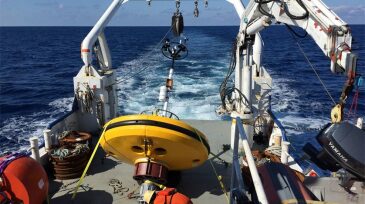
The Gulf Research Program of the National Academies of Sciences, Engineering, and Medicine has announced a new collaboration to support a pilot effort to convert an existing ocean mooring owned by Shell into the first long-term deep ocean observatory in the Gulf of Mexico.
-
A dire government report on the far-reaching impact of climate change could increase pressure on the energy industry to curb greenhouse gas emissions and political leaders to act more decisively to reduce the use of fossil fuels, analysts said.
-
While control of Congress and the gubernatorial races garnered the most attention, the 2018 midterm elections also provided voters in several states the opportunity to craft environmental and energy policy directly through ballot initiatives.
-
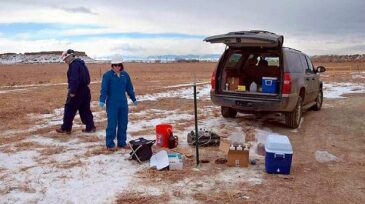
Three scientists say groundwater pollution in Pavillion, Wyoming, is likely caused by gas seeping from inadequately lined gas wells, a porous geology, and the dumping over years of up to 880,000 gallons of chemical effluent into 40 unlined pits.
-
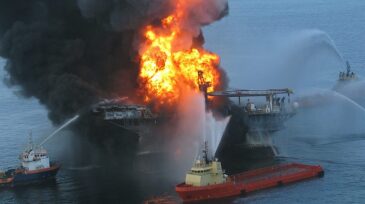
Research suggests that the formation of the deep plume was unrelated to the addition of subsea dispersants.
-
Scientists have found that man-made structures in the North Sea could play a crucial role in holding coral populations together and increasing their resilience.
-
Elevated concentrations of strontium, an element associated with oil and gas waste waters, have accumulated in the shells of freshwater mussels downstream from wastewater disposal sites, according to researchers from Penn State and Union College.
-
A new study offers answers to questions that have puzzled policymakers, researchers,and regulatory agencies for decades: How much methane is being emitted from natural gas operations across the US? And why have different estimation methods seemed to disagree?
-
Some of these technologies can be deployed now, but additional ones are needed to meet climate goals.