Environment

With millions of wells having been drilled in the US since the beginning of the oil age, the land is pocked with old, unused wellbores. For most, repurposing is a pipe dream. Plugging is the best option.

This guest editorial examines how the most commonly used and cited methane emissions metric can create a misleading picture of upstream gas-handling performance for both the public and industry professionals.

Spain has granted permits covering a swath of the mountain range to Mantle8 for natural hydrogen and helium exploration a month after France granted the company similar permits.
-
 Recently, Nigeria's Department of Petroleum Resources issued guidelines in furtherance of the objectives of the Flare Gas (Prevention of Waste and Pollution) Regulations, 2018.
 -
The New Owner Clean Air Act Audit Program, tailored specifically for oil and natural gas producers, will focus on offering more flexibility to new company owners who choose to self-audit their emissions and report any failures to meet EPA’s regulations.
-
While much progress has been made to reduce flaring, associated gas continues to be flared at thousands of oil production sites around the world. A further reduction may be achieved through a market-oriented approach to commercialization
-
Sami Alnuaim, 2019 SPE president, welcomed the addition of two new oil and gas sustainability initiatives at the University of Houston and highlighted a number of ways the industry is already acting as a good global steward.
-
Researchers combined detailed observations, laboratory experiments, and existing numerical models to develop the Texas A&M Oil Spill Calculator and improve predictions of subsea oil and gas plume dynamics.
-
On 2 January, Syncrude Canada pleaded guilty in the Alberta Court to one count of violating the Migratory Birds Convention Act, 1994, along with several provincial charges.
-
The Coast Guard has partially assumed federal control of response operations to contain an oil discharge from the site of the collapsed Mississippi Canyon Block 20 offshore platform 11 miles south of the mouth of the Mississippi River.
-
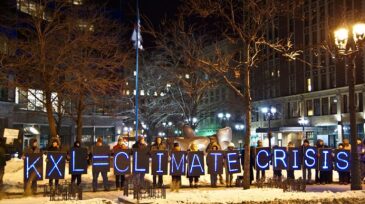
A year and a half after President Donald Trump reversed an Obama administration decision to block TransCanada’s Keystone XL pipeline, a federal district judge in Montana has halted the project again, citing an insufficient review of the project's environmental impact.
-
Scientists have discovered nearly two dozen new types of microbes, many of which use hydrocarbons as energy sources. The scientists suggest that these bacteria could help limit the concentrations of greenhouse gases in the atmosphere and could one day be useful for cleaning oil spills.
-
Royal Dutch Shell is changing its tune on carbon, saying it will tie executive pay to shorter-term reductions in emissions.