Environment
A laboratory research study evaluates several different chemical injection concepts for the removal of elemental mercury from multiphase flow.

Experts and industry leaders gathered in The Woodlands, Texas, recently to sift through the challenges of carbon capture, utilization, and storage. The puzzle is coming together, but some critical pieces are still needed before the results look like the picture on the box.

This article from the SPE Sustainable Development Technical Section (SDTS) explores how the next phase of methane performance will be defined less by pledges and more by measurement, response, and verifiable results.
-
 Airborne imaging spectroscopy has evolved dramatically since the 1980s as a robust remote-sensing technique used to generate 2D maps of surface properties over large areas.
 -
The Barzan Gas Project is a critical program to deliver natural gas to Qatar’s future industries.
-
If there is a discipline where current conceptual research and technology development expand simultaneously, involving highly interconnected people, it is health, safety, security, environment, and social responsibility.
-
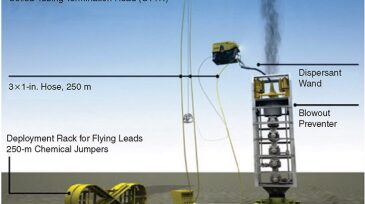
Total organized and ran a large exercise to check the ability to efficiently define, implement, and manage the response to a major oil spill resulting from a subsea blowout.
-
SPE's report on Worst Case Discharge is designed to help US offshore operators calculate WCD to comply with the BOEM definition.
-
The US government is working on regulations to reduce oil industry methane emissions by more than 40% over the next 10 years.
-
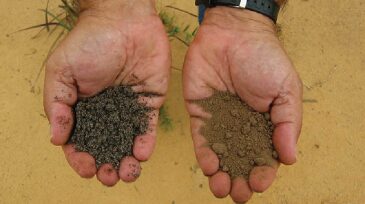
In the northeastern desert of Utah, a new type of oil sands extraction technology has been born. The company behind it claims the process is the most cost-effective and environmentally sound way to develop oil sands.
-
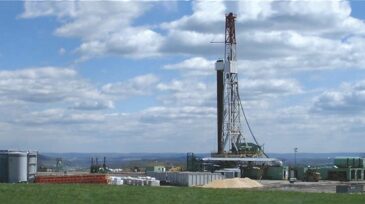
The rapid development of shale formations over the past decade has led the United States to become the world’s undisputed leader in natural gas production.
-
A new federal air quality rule from the United States Environmental Protection Agency (EPA) could affect how the oil and gas industry handles waste gas emissions.
-
In response to the 2010 Deepwater Horizon incident that claimed the lives of 11 men and led to the worst oil spill in United States history, the offshore industry devised new technologies and methods that would allow for a quicker response in the US Gulf of Mexico.