Environment

With millions of wells having been drilled in the US since the beginning of the oil age, the land is pocked with old, unused wellbores. For most, repurposing is a pipe dream. Plugging is the best option.

This guest editorial examines how the most commonly used and cited methane emissions metric can create a misleading picture of upstream gas-handling performance for both the public and industry professionals.

Spain has granted permits covering a swath of the mountain range to Mantle8 for natural hydrogen and helium exploration a month after France granted the company similar permits.
-
 ExxonMobil announced that it is partnering with two Singapore universities to open a Singapore Energy Center in 2019 to focus on new discoveries and significant improvements to technologies that could enhance energy efficiency and other efforts to mitigate the risks of climate change.
 -
A task force from The Academy of Medicine, Engineering, and Science of Texas has released a comprehensive analysis of the effects the North American shale boom has had on the environment and communities in Texas.
-
In recent years there has been a spike of research to determine what the extent of emissions are from fracked oil and gas wells. While much discussion has surrounded methane emissions, a greenhouse gas, less attention has been paid to air toxics.
-
One of the world’s biggest oil companies is working on hundreds of low-carbon energy projects, from algae engineered to bloom into biofuels and cells that turn emissions into electricity.
-
Norway has an ambitious plan to take carbon capture and storage offshore to a level that could potentially see the country becoming a store for other’s emissions.
-
ExxonMobil announced an enhanced program to reduce methane emissions from its production and midstream facilities across the US. The program includes a commitment to switch out more than 1,000 high-bleed pneumatic devices over 3 years.
-
The Pipeline and Hazardous Materials Safety Administration (PHMSA) is cracking down on smaller violations in the crude oil, petroleum, and hazardous liquid industries to combat a slow rise in the number of pipeline accidents.
-
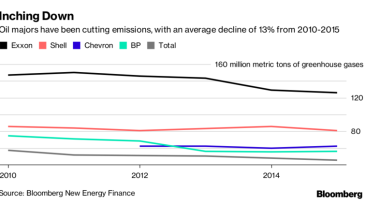
It’s no secret that oil majors are among the biggest corporate emitters of pollution. What may be surprising is that they’re reducing their greenhouse-gas footprints every year, actively participating in a trend that’s swept up most corporate behemoths.
-
Getting rid of wastewater from onshore wells has become an increasingly costly problem for oil producers as US crude output surged in recent years, especially in the new shale fields from Texas to North Dakota.
-
As companies begin examining facilities in the wake of Hurricane Harvey, commercial drones have become a valuable asset in reaching flooded areas too dangerous for people to reach.