Field/project development

New agreements for exploration and production in Africa include activity in the Orange Basin offshore Namibia, offshore Angola, Senegal, and Côte d’Ivoire. In the Gulf of Mexico, a memorandum of understanding for deepwater evaluation was signed between Woodside Energy and PEMEX and Viridien initiated its Walker Ridge Reimaging Extension. TotalEnergies provided a targe…

With confidence in subsea boosting performance growing, BP is incorporating pumping systems into both greenfield developments and brownfield expansions.

This paper presents an approach for safe, efficient, and cost-effective legacy well reabandonment.
-
 While militant attacks halted construction at Mozambique’s onshore megaprojects, Eni began LNG exports using a floating production strategy, which now serves as the foundation for its ongoing development.
 -
Japan’s largest power generator is focused on sourcing Haynesville natural gas production for Gulf Coast export as LNG.
-
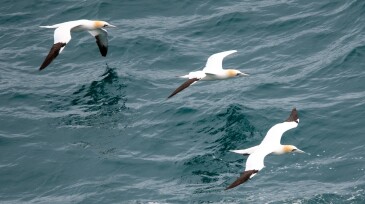
Buoy-based camera footage, analyzed by artificial intelligence, can help reduce the risk of birds colliding with offshore wind farm turbines.
-
Over a dozen new projects aim to keep US offshore output near 1.8 million B/D through next year.
-
The $2.9 billion Shah Deniz Compression project, expected online in 2029, will enable additional production of around 50 Bcm of gas and 25 million bbl of condensate.
-
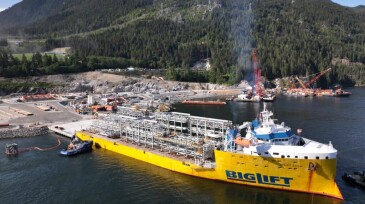
Project expects a total of 19 additional modules to arrive on site during 2025.
-
This paper discusses the effect of injected-polymer viscosity on various aspects of a project, from recovery to surface facilities, including both theoretical arguments and practical field experience—which do not always align.
-
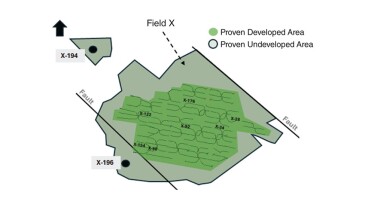
This study leverages oil-fingerprinting technology and geochemical data to evaluate the fluid connectivity between a main field and its stepout wells.
-
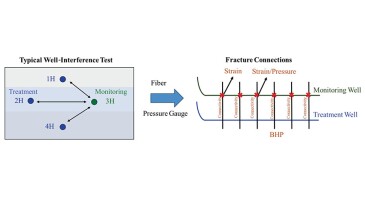
This work proposes a method to interpret far-field strain-change and pressure data to quantify fracture connectivity and properties at the cluster level.
-
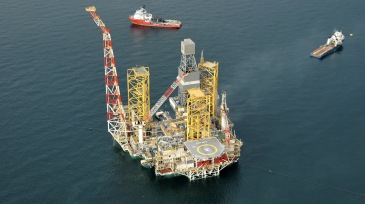
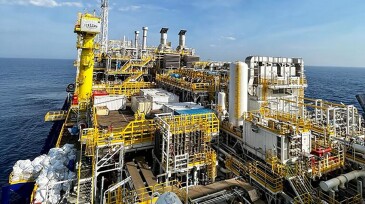
Once labeled “undrillable,” Brazil’s heavy-oil Atlanta field in the Santos Basin faced technical, financial, and logistical challenges. But through a phased approach, clever reuse of assets, and disciplined project execution, Brava Energia transformed a risky deepwater asset into a producing field with 172 million BOE in 2P reserves.