HSE & Sustainability

Located along the North Sea, the Humber is expected to play a central role in the UK’s effort to achieve a net-zero emissions status by 2050.

This article addresses the challenges of managing water-soluble organics (WSOs) in offshore produced water. It provides a brief discussion of the chemistry, along with strategies and technologies that can be used to manage WSO levels in produced water, thus facilitating compliance with regulatory overboard water-quality guidelines.

Spain has granted permits covering a swath of the mountain range to Mantle8 for natural hydrogen and helium exploration a month after France granted the company similar permits.
-
 From 26 to 27 August, industry executives, policymakers, financiers, researchers, and technologists will gather in Malaysia to explore the full potential of CCUS.
 -
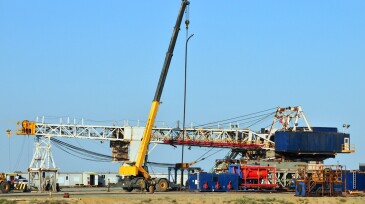
This paper explores the integration of human factors engineering principles into rig move planning to enhance safety in the oil and gas industry. It discusses the significance of considering human factors such as fatigue, stress, communication, and decision-making in rig move operations.
-
The author writes that Brazil can benefit by mirroring what proved decisive for CCS deployment in the US through a sovereign fiscal regime anchored by monetizing verified storage.
-
Short on skilled welders? For complex jobs like pressure-vessel seams, automation could be the key to keeping production safe, accurate, and on schedule.
-
The collaboration will see TGS’ software platform implemented throughout the carbon value chain at the Northern Lights project.
-
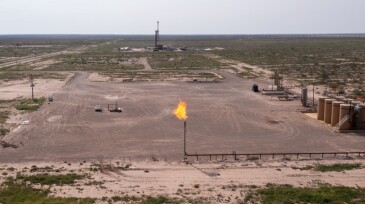
The new report shows that the intensity of methane emissions in the Permian Basin declined by more than half over 2 years.
-
With Brazil enacting South America’s first carbon capture and storage (CCS) law, this article examines the technical and regulatory architecture required to scale CCS deployment and provides exclusive insight into Brazil’s accelerating CCS landscape.
-
This paper describes a risk-based self-verification process conducted through a bespoke software application.
-
This paper discusses and demonstrates the limitations of quantitative risk assessment (QRA) with respect to the usefulness of the concept in managing day-to-day and emerging risks as well as the effect of change.
-
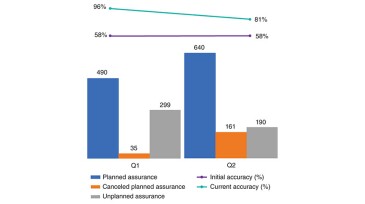
This paper describes a tool that complements predictive analytics by evaluating top health, safety, and environment risks and recommends risk-management-based assurance intervention.