HSE & Sustainability

The solvent-based technology involves a modular treatment process that uses a proprietary catalyst designed to safely and sustainably remove hydrogen sulfide (H₂S) from sour gas streams using either produced water or an alkaline water as the treating media.

After years of market shocks, technological breakthroughs, and rising uncertainty, ATCE 2026 will provide new insights on how industry leaders and technical experts are preparing for the next era of the upstream business.

A shared digital mindset across subsurface, subsea, and drilling and wells is accelerating well planning at Vår Energi.
-
 Ruwais is slated to be the first net-zero LNG facility in the Middle East and North Africa.
 -
The modular facility will process associated gas to produce electricity for up to 200,000 households in the Basra region.
-
As Southeast Asia’s third-largest gas producer, PTTEP is investing in its energy security by prioritizing gas production and building up a global LNG supply chain.
-
The decision invokes a 1953 law that will make it difficult for incoming US President Donald Trump to reverse.
-
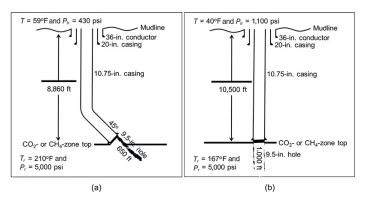
In this paper, a dynamic multiphase-flow simulator is used to evaluate the effectiveness and suitability of using a subsea capping stack to respond to a CO₂ well blowout.
-
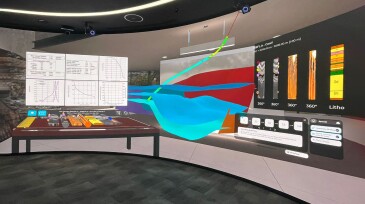
Virtual reality and related visualization technologies are helping reshape how the industry views 3D data, makes decisions, and trains personnel.
-
The objective of this paper is to outline the importance of new standards for studying hydraulic sealability of barrier materials, with an emphasis on interface analysis.
-
The oil and gas industry must balance global energy demands with stricter environmental regulations, particularly in drilling, where risks and complexities are higher. Innovative technologies, like those used in this stuck-pipe scenario offshore Azerbaijan, are key to overcoming these challenges and improving safety, speed, and efficiency.
-
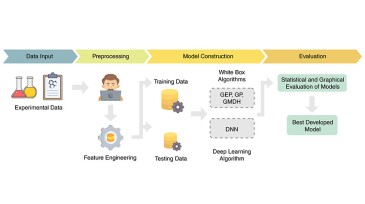
The objective of this study is to develop an explainable data-driven method using five different methods to create a model using a multidimensional data set with more than 700 rows of data for predicting minimum miscibility pressure.
-
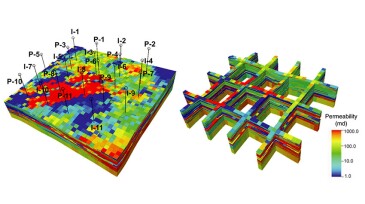
The authors of this paper propose hybrid models, combining machine learning and a physics-based approach, for rapid production forecasting and reservoir-connectivity characterization using routine injection or production and pressure data.