HSE & Sustainability

This paper presents a flexible, highly cost- and energy-efficient method of gas separation and CO₂ capture from many different gas mixtures with a large range of CO₂ concentrations.

This paper presents an approach for safe, efficient, and cost-effective legacy well reabandonment.

The solvent-based technology involves a modular treatment process that uses a proprietary catalyst designed to safely and sustainably remove hydrogen sulfide (H₂S) from sour gas streams using either produced water or an alkaline water as the treating media.
-
 The project aims to store 5 million tons of CO₂ annually, equivalent to a third of the total CO2 emissions from Dutch domestic vehicles in 1 year.
 -
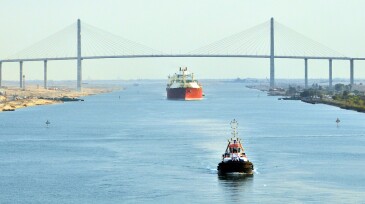
Attacks by the Iran-backed Houthi militants on ships passing through the Bab al-Mandab Strait and the Red Sea have surged recently, adding security risks to ships passing through the Suez Canal.
-
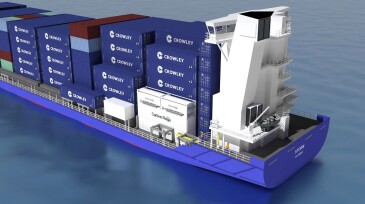
A pilot project will explore onboard carbon capture for container ships, and two heavy-hitters are teaming up to find decarbonization paths in the Asia Pacific region. Elsewhere, wind and solar are on track to pass coal in the race to generate electricity.
-
This paper investigates the extent to which corporate social responsibility (CSR) initiatives of oil companies operating in the Niger Delta area of Nigeria contribute to the development of host communities across the region.
-
The memorandum of understanding aims to improve digital work flows in the emerging carbon capture and storage industry.
-
For today’s oil and gas companies, digital twins offer untapped potential to decarbonize the leading source of their emissions—field production.
-
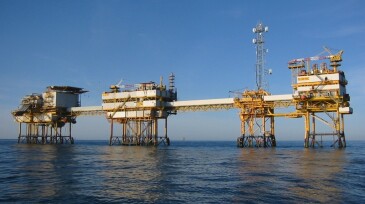
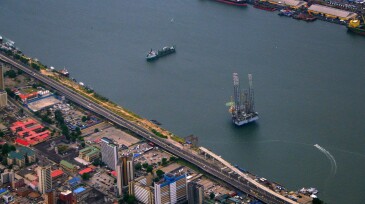
Achieving Safety at Sea—The Safety Programs of the Nigerian Upstream Petroleum Regulatory CommissionThe aim of this paper is to discuss the various safety programs adopted by the Nigerian Upstream Petroleum Regulatory Commission to reduce accidents in swamp and offshore areas, in which the bulk of the oil and gas operations occur.
-
The French company inked agreements at COP28 to share its newly developed CO2 and methane detection platform with NOCs in Brazil, Angola, and Azerbaijan.
-
With funding from the National Academies of Sciences, Engineering, and Medicine, the Argonne National Laboratory will explore using a method known for analyzing nuclear systems to enhance safety in offshore oil and gas operations in the Gulf of Mexico.
-
The current report presents data reported by 30 IOGP member companies for 2022.