HSE & Sustainability

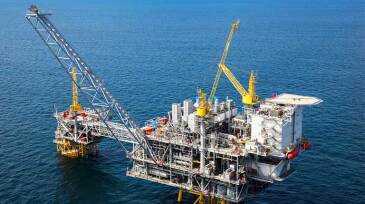
In a move tied to national security, a Trump-appointed committee voted to exempt oil and gas drilling in the Gulf of Mexico from Endangered Species Act requirements, marking the first such exemption in 3 decades.

The chair of the SPE Georgetown Section outlines how balanced, apolitical dialogue can support development amid rapid energy expansion.

The authors propose a deep-learning-based approach enabling near-real-time CO2-plume visualization and rapid data assimilation incorporating multiple geological realizations for predicting future CO2 plume evolution and area-of-review determination.
-
 Offshore oil and gas workers who regularly practice mindfulness may experience less fatigue and emotional and psychological strain, according to a study led by researchers at the University of Houston.
 -
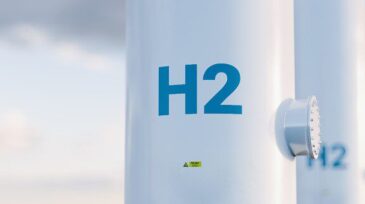
Hydrogen fuels, storage, and production projects are on the go, while CCS and wind projects receive significant international boosts from the likes of INPEX, Chevron, Equinor, and Eni and Amazon splashes cash for more than three dozen renewables projects.
-
Researchers also determined the cuts would provide more than $600 billion a year in health benefits in the United States.
-
The companies plan to capture CO2 from Linde's hydrogen liquefication plant in the Houston area and inject it into multiple storage sites.
-
The rule would require publicly traded companies to report not only their greenhouse-gas emissions but also their approach to managing climate change, likely setting up a long legal fight.
-
In a new TEDx Talk, Scott Tinker, director of the Bureau of Economic Geology, explains the energy-environment challenge facing a world in transition.
-
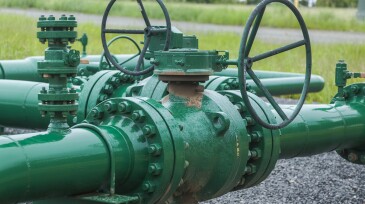
A new gas-gathering rule that has been issued by the US Department of Transportation's Pipeline and Hazardous Materials Safety Administration will soon expand oversight to all onshore gas-gathering pipelines, including about 425,000 miles of lines that had not previously been documented in annual reporting.
-
As climate change threatens reefs with bleaching, Danish energy company Ørsted is looking at growing noninvasive coral on offshore wind turbine foundations.
-
Will CO2 storage resources increase the valuation of oil and gas companies and counterbalance environmental, social, and governance pressure?
-
The two companies will focus on carbon capture technology along with carbon utilization and hydrogen production.