HSE & Sustainability

This paper proposes a shift in the timing of risk modeling to much further back within the job lifecycle, recognizing each function’s role in the mitigation of risk.
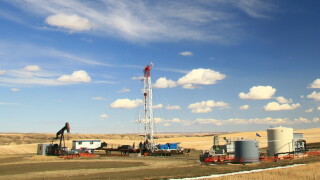
This article from the SPE Methane Technical Section features Arvind Ravikumar of the University of Texas at Austin and focuses on how the Energy Emissions Modeling and Data Lab is integrating satellite observations, facility-level measurements, operational data, and emissions inventories into more credible methane accounting for oil and gas systems.

The firm’s latest analysis puts the bulk of the blame on a fragmented supply chain.
-
 The Norwegian platform was taken off line as a precaution after an undersea earthquake shook the area.
 -
Research conducted by Rystad Energy indicates that spending on carbon capture and storage will quadruple in the next 3 years.
-
New lease agreements have secured more than 700 million metric tons of potential CO2 sequestration capacity.
-
Data science plays an increasing role in the fight against climate change. As we use data science to develop innovative solutions to climate change, we should be careful not to replicate, or worsen, existing inequities—or create new ones.
-
Higher bonding amounts and an expanded orphaned well program will fund the cleanup of thousands of aging sites.
-
This marks the first time the Federal Energy Regulatory Commission (FERC) has formally incorporated environmental justice considerations into one of its policies, making environmental justice a matter to be considered systematically in FERC proceedings for certificates of public convenience and necessity.
-
A study in North Dakota found that respiratory illness increased as far as 60 miles away from flaring of natural gas.
-
From 2013 to 2018, the number of terrestrial and marine spills reported in Trinidad and Tobago trended upward. The country’s Ministry of Energy and Energy Industries assessed its National Oil Spill Contingency Plan (NOSCP) with the Readiness Evaluation Tool for Oil Spills and identified gaps in national legislation, risk management, logistics, training and exercises, …
-
Virtue signaling alone is not a viable strategy to deal with climate issues. However, virtue signaling best leads to “virtuous” behavior. A company motivated only by appearances will face forces to keep up appearances. As firmer pressure teed up, voluntary corporate and national commitments to net-zero emissions have grown exponentially.
-
The DS-16 is one of four Valaris rigs undergoing reactivation work for new drilling contracts.