HSE & Sustainability

After years of market shocks, technological breakthroughs, and rising uncertainty, ATCE 2026 will provide new insights on how industry leaders and technical experts are preparing for the next era of the upstream business.

Investment research firm TSCS reports that 60 to 65% of the highest-quality acreage in the Permian Basin, the most productive US shale basin, has already been drilled. The firm also estimates that only 3 to 4 years of Tier 1 premium inventory remains at the current drilling rate. This is driving industry-wide strategy shifts as companies move to lower tier and specula…

A shared digital mindset across subsurface, subsea, and drilling and wells is accelerating well planning at Vår Energi.
-
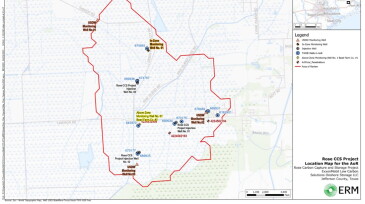
 In a 2-1 vote, The Texas Railroad Commission approved the Rose carbon capture and storage project in Southeast Texas, which is planned to store up to 5 million tonnes of carbon dioxide per year.
 -
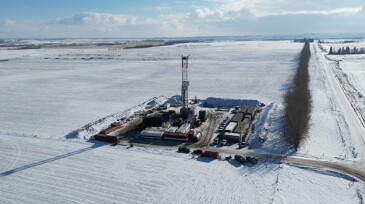
The Origins hub in Alberta, with plans to begin operations in January 2027, is expected to store up to 1.5 mtpa of carbon dioxide initially, with room to grow.
-
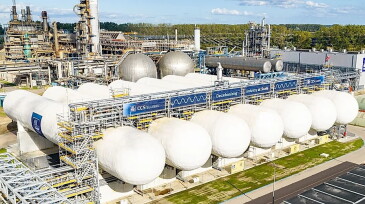
The Yara Sluiskil facility in the Netherlands expects to capture and liquefy 800,000 tons of carbon dioxide annually. The carbon dioxide is to be transported by Northern Lights vessels to Øygarden, Norway, where it will be stored.
-
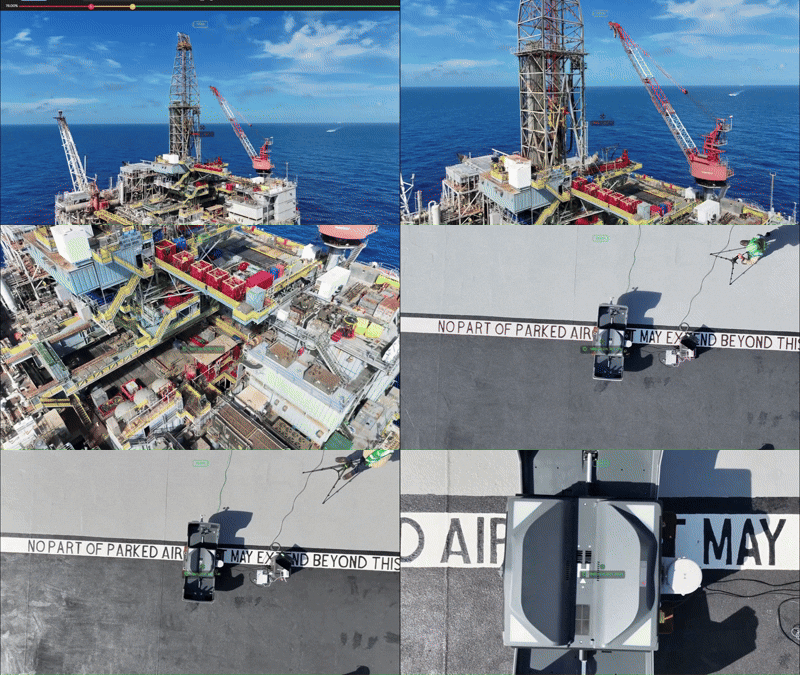
Shell has demonstrated drone-in-a-box operations from its Mars floating production unit, becoming the first operator in the region to secure FAA approval for self-approved offshore beyond-visual-line-of-sight flights. JPT Senior Technology Editor Jennifer Pallanich visited Shell Technology Center Houston to see the system in action.
-
The startup company’s Midland Basin demonstration plant, located in the Permian Basin, takes a major step toward commercialization by proving its direct lithium extraction technology can refine battery-grade lithium carbonate from produced water under multiple 24/7 production cycles.
-
This paper presents an approach to the identification, selection, and implementation of initiatives for sustainable water management, withdrawal reduction, and water valorization.
-
This paper presents an experiment investigating dissolution of basaltic primary minerals and conditions favorable for secondary phase formation under deep subsurface storage conditions.
-
This study aims to investigate the efficacy of chemical additives strontium chloride and barium hydroxide in accelerating CO₂ trapping mechanisms, their effect on dissolution of carbonate-bearing minerals, and resulting poroelastic changes in the host rock.
-
This paper explores the application of a modular, high-temperature gas-cooled nuclear reactor to a Very Large Crude Carrier-class floating production, storage, and offloading vessel.
-
This paper describes the potential of combined-cycle technology (use of a gas turbine and a steam turbine together to turn fuel into electricity) in offshore carbon-capture applications.