HSE & Sustainability

LibertyStream has signed a feedstock agreement with Goodnight Midstream to support its first commercial lithium carbonate facility in North Dakota's Bakken, advancing plans to extract battery-grade lithium from produced water.

The transition away from materials that contain per- and polyfluoroalkyl substances (PFAS), co-called forever chemicals, creates an opportunity to preserve historical information. Information that appears to have little operational value today may later become important when organizations need to evaluate past PFAS use. Once that information is lost, recreating it may…

TotalEnergies signed off for 30% operated stakes in the Lang Lebah and B14 gas fields offshore Sarawak on the sidelines of ADIPEC in Abu Dhabi, while also highlighting methane-reduction partnerships in Angola, India, and Southeast Asia.
-
 A Florida appeals court has approved exploratory oil drilling in the Everglades, prompting worries about Miami’s water supply and risks to the wetland ecosystem.
-
For safety training, quality appears to be more important than quantity, according to a study conducted by Environmental Resources Management. The 2018 Global Safety Survey examined responses from 144 safety leaders from 120 corporations, approximately 20% of which were oil and gas companies.
-
This paper argues for a new workplace safety and health 4.0 strategy that requires an adaptive and highly responsive approach to promote total worker health in the face of rapid technological advancements.
-
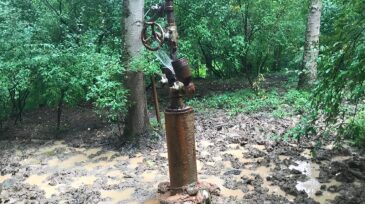
Kentucky lawmakers have introduced House Bill 199 to plug orphaned oil and gas wells and abandoned storage tanks that threaten health, safety, and the environment.
-
To celebrate Engineers Week, 2019 SPE President Sami Al-Nuaim shares why he became an engineer and how engineers affect the world.
-
The Oil and Gas Institute at Robert Gordon University is working with Drilling Systems and its drilling, well-control, and lifting simulator technology to help oil and gas companies identify ways to improve efficiencies and raise safety standards.
-
In 2015, the United Nations ratified the 2030 Sustainable Development Goals. Technology will be critical in the pursuit of these ambitious targets, but the pace and scale of change creates risks that humanity must take very seriously.
-
Three papers selected from 2018 SPE ATCE look at the challenges and approaches to the treatment of increasing volumes of produced water.
-
A bipartisan group of House lawmakers introduced legislation that would ban oil and natural gas drilling in Alaska’s Arctic National Wildlife Refuge.
-
Management of produced water is driving subtle yet potentially consequential changes in certain regions. Contributing factors for seismicity and well pressurization, while different, share some elements. By assessing these common elements, partial risk profiles for both conditions can be assessed.