HSE & Sustainability

LibertyStream has signed a feedstock agreement with Goodnight Midstream to support its first commercial lithium carbonate facility in North Dakota's Bakken, advancing plans to extract battery-grade lithium from produced water.

The transition away from materials that contain per- and polyfluoroalkyl substances (PFAS), co-called forever chemicals, creates an opportunity to preserve historical information. Information that appears to have little operational value today may later become important when organizations need to evaluate past PFAS use. Once that information is lost, recreating it may…

TotalEnergies signed off for 30% operated stakes in the Lang Lebah and B14 gas fields offshore Sarawak on the sidelines of ADIPEC in Abu Dhabi, while also highlighting methane-reduction partnerships in Angola, India, and Southeast Asia.
-
 In the latest effort by municipalities seeking to hold fossil fuel companies liable for their alleged contribution to climate change, the city and county of Boulder, Colorado, and the county of San Miguel filed suit against two companies on 17 April.
-
On 26 April 2018, Canada's minister of environment and climate change announced new regulations under the Canadian Environmental Protection Act, 1999, to reduce methane emissions in the oil and gas sector by almost half.
-
ExxonMobil announced greenhouse gas reduction measures that are expected to lead to significant improvements in emissions performance by 2020, including a 15% decrease in methane emissions and a 25% reduction in flaring.
-
Longmont, Colorado's City Council voted to give final approval to the city's $3 million agreement with TOP Operating and Cub Creek Energy that officials have said will end oil and gas drilling from the surfaces of properties within the city, as well as city-owned properties east of Longmont.
-
Sleep deprivation is a workplace health concern that is often ignored. It can decrease productivity as well as be a frequent root cause for many safety incidents, accidents, and damages to property. Employers are often unaware of the effect sleep deprivation can have until a serious incident occurs.
-
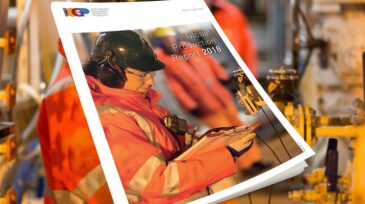
Oil and gas demand is stable or rising in all regions of the world, meaning additional investments are needed for production to keep up. Growing indigenous requirements reduce volumes available for export in many regions, IOGP’s new Global Production Report shows.
-
At the 2018 SPE International Conference and Exhibition on Health, Safety, Security, Environment, and Social Responsibility, Abdulla Al Marzooqi, manager of ADNOC’s Group HSE Unit and conference chairman, spoke with reporter Eithne Treanor. Watch the interview here.
-
Maintaining a social license to operate is critical for the oil and gas industry to continue to provide energy for the world. Fernando Benalcazar recently completed his Distinguished Lecturer tour, during which he spoke on “Oil and Gas Operations—Integrating the Realities of the Social License.”
-
Researchers have discovered that genes regulating important biological processes are incapable of adapting to new sleeping and eating patterns and that most of them stay tuned to their daytime biological clock rhythms.
-
When inactivity is largely the result of months and eventually years spent at a desk job or in meetings, could an employer face liability for any serious medical issues that ensue? A recent study from Philadelphia’s Drexel University concluded that—at least for US workplaces—the answer might be yes.