HSE & Sustainability

This article addresses the challenges of managing water-soluble organics (WSOs) in offshore produced water. It provides a brief discussion of the chemistry, along with strategies and technologies that can be used to manage WSO levels in produced water, thus facilitating compliance with regulatory overboard water-quality guidelines.

Spain has granted permits covering a swath of the mountain range to Mantle8 for natural hydrogen and helium exploration a month after France granted the company similar permits.

Crude benchmarks spiked amid concerns that the US-Iran ceasefire is collapsing as commercial shipping comes under renewed attack.
-
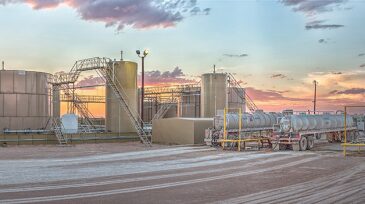
 Rising oil production in the Permian Basin has created an opportunity for midstream companies to acquire and expand pipeline infrastructure to handle a predicted spike in produced water.
 -
Two Gulf of Mexico incidents occurred that were related to compressors not being purged properly prior to startup. BSEE issued a Safety Alert outlining the circumstances and made recommendations for prevention.
-
A corrosive gas that is fatal to humans in high concentrations should not be a toxic substance under Canadian environmental law, say federal researchers in a new proposal.
-
One of the great challenges we face in leading a safety culture is how to communicate safety such that it has a lasting impact on employees.
-
International Maritime Organization regulations state that lifeboat release and retrieval systems must be evaluated and replaced no later than 1 July 2019.
-
Congress is close to lifting a 40-year-old ban on energy development in Alaska’s Arctic National Wildlife Refuge, but drilling for oil in that frozen wilderness may still be years away as the effort faces exhaustive environmental reviews and likely lawsuits.
-
Bowing to pressure from shareholders and the Paris international climate accord, Royal Dutch Shell pledged on 28 November to increase its investment in renewable fuels and to cut its carbon emissions in half by 2050.
-
The Trump administration is considering easing offshore oil and gas safety regulations, including eliminating certain requirements for Arctic drilling , and cutting testing requirements for rules developed in response to BP's Deepwater Horizon disaster, an Interior Department document showed.
-
Public perceptions matter. The industry needs to take a proactive and solution-centric position with respect to the Paris Agreement and join the battle for the clean and affordable kilowatts of energy the markets will increasingly favor.
-
With the API and a multi-operator group passing separate programs aimed at reducing methane emissions, the discussions on what defines an acceptable level of regulation continues within the industry.