HSE & Sustainability

This article addresses the challenges of managing water-soluble organics (WSOs) in offshore produced water. It provides a brief discussion of the chemistry, along with strategies and technologies that can be used to manage WSO levels in produced water, thus facilitating compliance with regulatory overboard water-quality guidelines.

Spain has granted permits covering a swath of the mountain range to Mantle8 for natural hydrogen and helium exploration a month after France granted the company similar permits.

Crude benchmarks spiked amid concerns that the US-Iran ceasefire is collapsing as commercial shipping comes under renewed attack.
-
 An offshore worker has called for action after he and colleagues were exposed to radiation, BBC Scotland can reveal. The incident happened on EnQuest’s Thistle platform, off Shetland, last December.
 -
As the number of tankers on the open sea remains high, a new motion-prediction software aims to increase vessel safety.
-
Oily waste, is an intrinsic byproduct of the oil and gas industry and thermal desorption units with an odor-treatment system can bring technical and economic advantages to the user.
-
The new head of ExxonMobil used his first major public appearance to emphasize the major oil company's committment to environmental concerns through the development of emerging technologies.
-
Forty-thousand doctors, nurses, and public-health professionals have asked the oil and gas industry to stop opposing policies to reduce methane emissions.
-
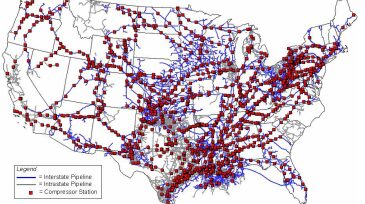
As compressor stations are added to the natural gas gathering and transmission networks, the potential noise issues are coming under increasing public scrutiny at the same time as regulations are being rolled back.
-
Organizational determinants of shift work practices are not well characterized; such information could be used to guide evidence-based research and best practices to mitigate shift work’s negative effects.
-
A new play in the Permian Basin is unconventional in an unexpected way: there is a small group of independents producing from a watery formation where oil production begins after they have pumped only water for weeks.
-
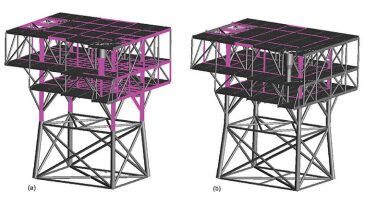
Applying sufficient passive fire protection (PFP) on topside structural-steel members is critical. Simplified and conservative approaches are available to estimate the extent and amount of PFP necessary.
-
Current methods for external inspection of floating assets on station use divers or remotely operated vehicles (ROVs), but these methods incur high safety, people-on-board (POB), and cost penalties. New methods to eliminate diving are being developed.