HSE & Sustainability

The firm’s latest analysis puts the bulk of the blame on a fragmented supply chain.

This paper reviews a proof-of-concept project in which surplus casing pipes were used in the fabrication of purposefully designed artificial reef structures for the enhancement of biodiversity and commercial fisheries.

This work describes a study in which distributed data parallel training, paired with a node-local caching pipeline, enabled efficient multigraphics-processing-unit scaling for a CO₂-storage graph-neural-network surrogate while maintaining generalization.
-
 This paper describes a chemical-free process with a small footprint designed to capture exhaust from natural gas drive compressors and supporting gas-fueled production equipment.
 -
Jim Gable, president of Chevron Technology Ventures, shares how CTV works with startups and how their technologies go big.
-
Failure to electrify facilities in the UK North Sea could soon result in a denial of petroleum licenses and the forced closure of some offshore assets.
-
The partnership seeks to shift the economics of carbon capture across high-emitting industrial sectors.
-
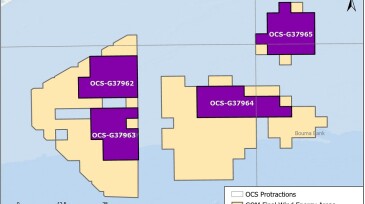
The department says the four areas, totaling 410,000 acres, have the potential to power 1.2 million homes.
-
The report provides a checklist for medical professionals to assess local health facilities by guiding them through key elements that should be considered.
-
The global oil and gas industry association dedicated to advancing environmental and social performance was established in 1974 at the request of the United Nations Environment Programme.
-
This article explains 10 focus necessities and provides a guide on gathering perspectives from key stakeholders to prioritize an improvement plan or create a more robust safety improvement strategy.
-
This paper aims to demonstrate how virtual reality, a technology that gives the user an immersive 3D experience, is being used as part of major-accident-hazard awareness training and how this has been sustained to provide an innovative, powerful method of ongoing workforce engagement.
-
The availability of robust, measurement-informed emissions information across global supply chains is critical to the success of any target-based methane policy. Yet very few countries can provide robust data on emissions intensity across natural gas value chains.