HSE & Sustainability

This paper proposes a shift in the timing of risk modeling to much further back within the job lifecycle, recognizing each function’s role in the mitigation of risk.
This article from the SPE Methane Technical Section features Arvind Ravikumar of the University of Texas at Austin and focuses on how the Energy Emissions Modeling and Data Lab is integrating satellite observations, facility-level measurements, operational data, and emissions inventories into more credible methane accounting for oil and gas systems.

The firm’s latest analysis puts the bulk of the blame on a fragmented supply chain.
-
 The $25 million is an initial grant from the recent Bipartisan Infrastructure Law passed last November.
 -
Unique partnerships forward both conventional renewables and new technologies to close the gap for a carbon-free future across the globe.
-
Among other things, Microsoft is making it possible for Exxon to analyze reams of oilfield data. Amazon is helping drillers run simulations to maximize how much oil they can pump from existing wells.
-
The 2022 Presidential Award for Outstanding Technical Section, the first of its kind, recognizes the top 5% of the society’s technical sections.
-
The new-generation FPSO will minimize emissions with carbon capture and reinjection as well as energy-recovery capabilities.
-
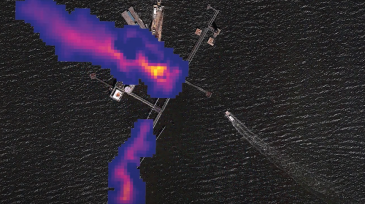
Airborne emissions surveys of offshore oil and gas facilities are not as common as those done onshore. A recent study suggests that needs to change.
-
Shell’s venture capital subsidiary has acquired Sprng Energy, one of India’s largest renewables platforms, thus tripling its operating wind and solar power assets.
-
The increase in CO2 emissions has been dramatic in the last few decades. A possible solution to this difficult and intractable problem can be adopting a circular carbon economy.
-
The objective of this study is to improve the current understanding of the hydrodynamic processes arising when hydrogen is stored in subsurface porous media. This work compares the use of two cushion gases, namely carbon dioxide and methane, for hydrogen storage in a synthetic aquifer.
-
"Our safety record is unacceptable, and improvements must be made," Kris Smith said.