Human resources

The Career Advancement Network held its Energy Professionals Hiring Event at SPE’s 2026 Offshore Technology Conference, allowing participants to connect with employers, explore opportunities, and seek information about job opportunities in a rapidly evolving industry.

The chair of the SPE Georgetown Section outlines how balanced, apolitical dialogue can support development amid rapid energy expansion.

Major increases in hydrocarbon production require both incremental and revolutionary technologies, industry leaders said during the SPE Hydraulic Fracturing Technology Conference.
-
 An interview with Reem Al Ghanim, head of human resources and support services–chemical division at Saudi Aramco.
 -
Digital transformation offers opportunities beyond the technical goal of increased production. It may also enhance sustainability, the work/life balance, and the public’s perception of the industry.
-
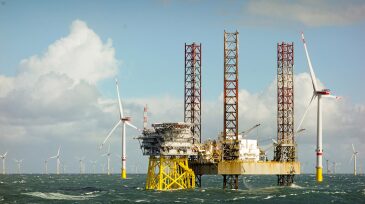
Offshore wind energy projects provide appealing options for the application of the skills and knowledge of practitioners involved in the design and fabrication of oil and gas facilities, especially those with offshore experience.
-
The increase in OFS and equipment sector jobs over the past 2 months came amid higher oil and gas production. But increases in COVID-19 cases are causing uncertainty about when and how much demand will rise.
-
In 2020, several changes were made to increase the usability of the annual SPE Membership Salary Survey. Among the added highlights, the 2020 survey offers new analyses of compensation by engineering title and overall work experience.
-
The two largest oil companies in the US are shedding thousands of employees and contractors to cope with a steep decline in demand.
-
Deloitte discusses the “great compression” of the oil and gas industry in which companies’ room to maneuver is restricted. How can the industry avoid a talent gap and stop an organizational challenge from becoming a precarious business problem?
-
Chevron is initiating its layoffs of up to 15% of its global workforce of 45,000 first announced in late May by asking employees to reapply for positions. It closed its $4.1-billion acquisition of Noble Energy this week in which it gained 2,200 employees.
-
Equinor plans to cut its global exploration staff by 30% in the next 3 years and plans to drill 30–40 wells globally this year. Ongoing labor strikes have led to the operator shutting in four of its platforms.
-
Shell's CEO said the Dutch supermajor has "too many layers" and that the move to downsize will help ensure its future. As a result, at least 9,000 people are expected to leave the oil and gas producer between now and 2022.