Asset Management

This paper presents a flexible, highly cost- and energy-efficient method of gas separation and CO₂ capture from many different gas mixtures with a large range of CO₂ concentrations.

This work introduces a novel predictive methodology combining historical metocean data with real-time riser analysis for shallow water dynamically positioned rig operations.

This study explores the carbon-capture and mineralization potential of ultramafic rock powders when exposed to flue gases generated from combustion of crude oil and mesquite-derived charcoal.
-
 Executives from BKV Corp. share why the mid-sized natural gas producer is diving headfirst into carbon sequestration projects and why you should too.
 -
Updates about global exploration and production activities and developments.
-
SPE President Terry Palisch is joined by Bryan Hibbard, senior editorial operations manager for SPE, to highlight how writing SPE technical papers and articles for JPT, SPE Journal, and other SPE publications can help to boost your career.
-
Uncertainty comes in all scales and dimensions. This challenges us to learn at all scales possible, from the fume hoods in the laboratory to magnificently exposed outcrops and through deep narrow boreholes that drill through subsurface reservoirs. The combined efforts often convert learnings to actionable intelligence.
-
The topics covered in JPT’s Technology Focus feature span the breadth of the upstream industry. A review of these topics over the years illustrates the changes that have affected E&P professionals.
-
Longtime JPT Technology Editor Dennis Denney discusses his career at SPE and the development of the magazine’s Technology Focus feature.
-
The Libra Consortium, led by Brazil’s Petrobras, has developed a method of separating carbon dioxide from reservoir fluids at the seafloor rather than the FPSO topsides.
-
Two supermajors exit California, and the US put the brakes on permits to export LNG.
-
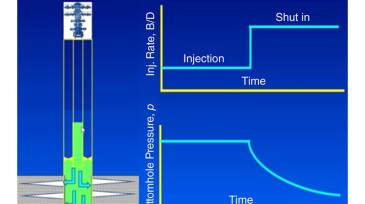
In this paper, the effect of cold-water injection on pressure transient analysis (PTA) of geothermal reservoirs is studied by varying the temperature of the injected cold water from room temperature to reservoir temperature.
-
This paper presents a case study on injectivity tests to prove the concept of carbon capture, use, and sequestration capability, describing the design of surface and downhole testing systems, lessons learned, and recommendations.