Asset Management

Talos Energy founder Tim Duncan has been named executive chairman of newly formed 1947 Oil&Gas, which will focus on acquiring and developing mature, shallow-water assets through its buyout of Renaissance Offshore. The deal is expected to close in Q2 2026.

Operators aren’t rushing to drill, even as the closure of the Strait of Hormuz drives oil prices up.

The following three papers show challenges and potential solutions across various stages of the deepwater well-development cycle from a variety of deepwater basins across the world.
-
 Influence is an important part of engineering. It is not enough to develop a brilliant design; you have to convince someone to build it. Intuition and reason are important factors in influence.
 -
One of the latest offshore innovations from Statoil is nothing flashy, which is the point. A drawing shows a plain, steel jacket, standing in water 110 m deep, topped with a flat metal deck.
-
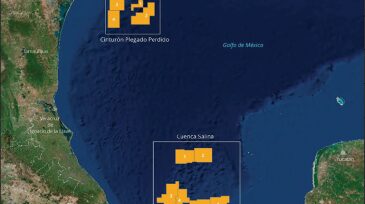
The deepwater blocks Mexico plans to lease to international operators in December are among the deepest, most remote, and geologically challenging in the world. But the difficulties of developing these areas will start onshore, where adequate and secure port facilities are few and far between.
-
Holding little back, speakers at the annual IHS CERAWeek conference in February discussed how the industry has been shaped by the disruptive impact of North American shale production and predicted that many more months of financial pressure will spell the end for some companies.
-
Russian oil production has remained on a growth path despite the plunge in oil prices because producers have built their business on producing oil for less than USD 30/bbl.
-
When it comes to hydraulic fracturing, steadiness may not be a virtue. That was the conclusion of a test to see if rapid pump rate variations would lead to greater production than conventionally fractured stages when the pressure was held steady.
-
Why do we as an industry do so poorly in executing large capital projects? Oil and gas is not alone. The many reasons for failure of megaprojects fall into five broad categories.
-
Panelists at CERAWeek discussed the numerous steps their companies are taking to achieve large-scale permanent, in addition to cyclical, capex reductions on major projects.
-
Understanding how much rock is being stimulated and propped is critical for unconventional producers. New imaging methods using electromagnetic energy or acoustic microemitters could represent a milestone in understanding what is left behind after fracturing.
-
The industry is in one of its periodic downturns. Jobs are uncertain or scarce. Profitability is challenged. Bankruptcy looms. Projects are being canceled. Deals are dropped or delayed. It seems there is bad news everywhere. So how do we survive in this environment?