Onshore/Offshore Facilities

The Absheron gas field expansion will supply additional natural gas to Azerbaijan’s domestic market and support its export commitments to Turkey, allowing Baku to stay focused on meeting its gas export obligations to Europe.

A credible custody-transfer record depends on far more than the accuracy of a single meter. It is the product of an integrated measurement chain. While meter performance supports measurement-system integrity, commercial confidence also depends on traceability, governance, and authorization.

Despite significant progress in capturing associated gas for domestic use, Iraq remains the world’s third-largest gas-flaring country as it aims for higher oil and gas production targets.
-
 The UK-based energy infrastructure development firm has entered an exclusivity agreement with Meridian Holdings for an FSRU project offshore northwest England. The project would include a floating FLNG receiving port.
 -
Driven by Mozambique’s Area 1 and Area 4 projects, Africa is poised to become the dominant LNG investment destination by the end of this year, with the continent seeing nearly one-third of total greenfield investment.
-
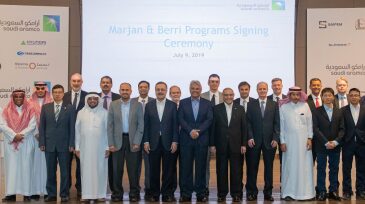
The world’s largest oil producer has awarded $18 billion in engineering, procurement, and construction contracts as part of its Marjan and Berri expansion projects.
-
Growing supply of Permian crude oil means the basin will need extra takeaway capacity of up to 500,000 B/D by the end of the 2020s, according to new research from Wood Mackenzie.
-
The Norwegian operator will increase its ownership of the giant Johan Sverdrup field before the field commences oil production this November.
-
Early production from Area 1 is the first output from an international operator in Mexico since energy reforms were implemented earlier this decade.
-
With almost 10 Bcf/D of liquefaction capacity scheduled to go into service by 2025, a new report from Moody’s says that US LNG exports should help solidify a floor under natural gas prices as LNG markets see a shortfall in supply.
-
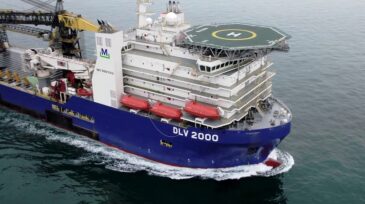
Completion comes despite two cyclones disrupting the project area during installation, McDermott said.
-
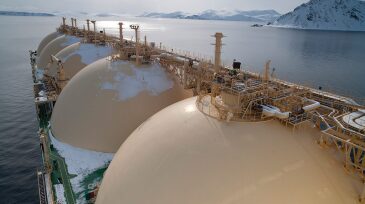
In its first 50 years, LNG has become the world’s fastest-growing gas supply source and is now part of an upheaval in the global energy market. Today, the sector stands at a crossroads, and the industry must adopt new thinking to address current and future needs of buyers, sellers, and consumers.
-
Exponential thinking is called the “exponential surprise factor.” These underpinnings are observed on the tubular mechanics side also through data analytics, machine learning, artificial intelligence, and cognitive processes.