Onshore/Offshore Facilities

The Absheron gas field expansion will supply additional natural gas to Azerbaijan’s domestic market and support its export commitments to Turkey, allowing Baku to stay focused on meeting its gas export obligations to Europe.
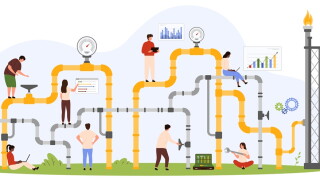
A credible custody-transfer record depends on far more than the accuracy of a single meter. It is the product of an integrated measurement chain. While meter performance supports measurement-system integrity, commercial confidence also depends on traceability, governance, and authorization.

Despite significant progress in capturing associated gas for domestic use, Iraq remains the world’s third-largest gas-flaring country as it aims for higher oil and gas production targets.
-
 Global spending on oil and gas decommissioning is expected to be $13 billion per year by 2040. The launch of a collaborative supply chain approach to global decommissioning offers an end-to-end solution to reduce the decommissioning burden, risk, and cost for operators in Europe, Asia, and Americas.
 -
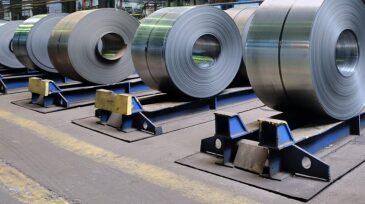
How will a US steel tariff affect the oil and gas supply chain? Industry criticism points to a noticeable effect on construction expenditure and jobs, but where will the pain be most felt?
-
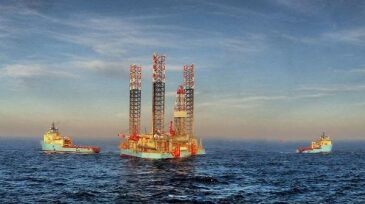
Sustainable cost reductions through innovation and standardization will have more of a positive effect on the offshore sector than cyclical oil-price increases, an OTC panel of industry participants agreed.
-
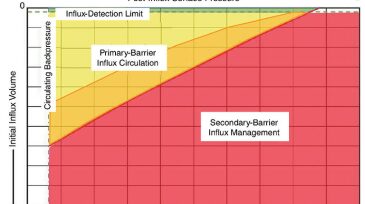
The influx-management-envelope (IME) concept is an advanced, innovative way to assess influx conditions in managed-pressure-drilling (MPD) operations, offering an improved tool for the decision-making process.
-
The joint venture will include work on P&A, towage of floating units, and removal of subsea infrastructure, with the ultimate goal of providing the full end-to-end process for decommissioning.
-
Advanced AUVs with early-stage technologies for live streaming, ultrasonic testing, and 3D laser scanning are set to enter inspection trials on North Sea facilities. The aim is to reduce facilities inspection costs by 50%.
-
TechnipFMC confirms the December shipment of LNG from its new facility in northern Russia, one of the largest integrated LNG projects in the world.
-
Subsea 7 completed the acquisition of Siem Offshore Contractors along with a cable-lay vessel and a support vessel.
-
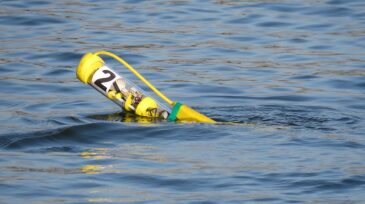
Aquabotix’s SwarmDiver technology marks a major milestone in the growing trend toward swarm-deployed underwater vehicles.
-
We don’t include a structure like the Eiffel Tower with separators, pumps, and compressors on the top observation platform in an onshore development plan. And yet, how many jacket platforms are there around the world?