Onshore/Offshore Facilities

Despite significant progress in capturing associated gas for domestic use, Iraq remains the world’s third-largest gas-flaring country as it aims for higher oil and gas production targets.

The 2026 Upstream Scale Guidelines establish a common workflow for field measurements, scale modeling, and risk assessment to support more consistent operational decisions.

Shell has reached FID on LNG Canada Phase 2, a major expansion that will double the Kitimat facility’s LNG export capacity to 28 mtpa and strengthen long-term supply to growing Asian markets.
-
 The oil and gas industry has witnessed significant advancements in downhole technology. The technical papers here offer valuable insights into these developments, exploring nonmetallic downhole tubulars, collaborative ecosystems, material selection, environmental sustainability, and mechanical evaluation, showing a promising alternative to traditional steel counterpar…
 -
The Savvy Separator series continues as we share case studies of troubleshooting separator problems. This article focuses on installation issues. Brief problem statements, root causes, and lessons learned are given.
-
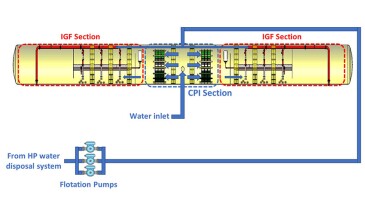
The retrofit merged enhanced gravity separation with induced gas flotation within the same vessel. Detailed insights into the design, operation, and performance of hybrid flotation systems are provided, offering valuable guidance for similar initiatives in the petroleum industry.
-
SponsoredThe new Midstream Petroleum Engineering master's and certificate programs are groundbreaking and the first of their kind with industry-relevant curriculum, flexibility, networking opportunities, and a focus on the energy industry of tomorrow. Chart your course ahead in a bold way and secure your spot today.
-
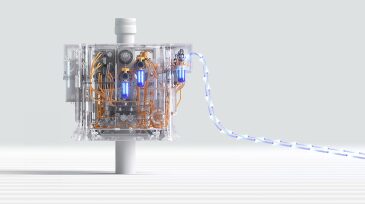
Contractor will conduct front-end engineering of a first-of-its-kind all-electric subsea production system.
-
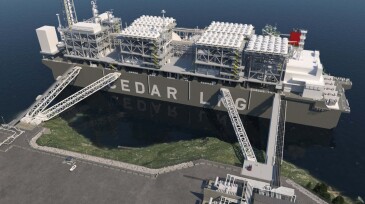
The project's floating LNG facility will be installed in the traditional territory of the Haisla Nation on Canada’s West Coast.
-
The Bureau of Safety and Environmental Enforcement (BSEE) recently conducted an inspection at the South Fork Wind project, the bureau’s first inspection of an operational offshore wind turbine in US waters.
-
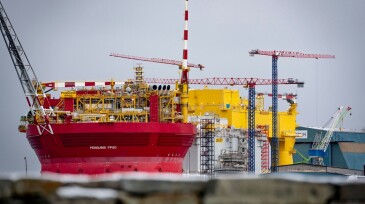
Startup work at Shell’s North Sea redevelopment project is on track to commence later this year.
-
Gas production from the field will be supplied to both the local market and the Nigeria LNG plant.
-
Supermajor expands its global LNG footprint in a deal that will grow its presence in Asia and Europe.