Onshore/Offshore Facilities

Despite significant progress in capturing associated gas for domestic use, Iraq remains the world’s third-largest gas-flaring country as it aims for higher oil and gas production targets.

The 2026 Upstream Scale Guidelines establish a common workflow for field measurements, scale modeling, and risk assessment to support more consistent operational decisions.

Shell has reached FID on LNG Canada Phase 2, a major expansion that will double the Kitimat facility’s LNG export capacity to 28 mtpa and strengthen long-term supply to growing Asian markets.
-
 The acquisition of Crestwood Equity Partners extends Energy Transfer’s position deeper into the Williston and Permian basins and provides entry into the Powder River Basin.
 -
Work is to be executed offshore Congo, the US Gulf of Mexico, Romania, and Germany.
-
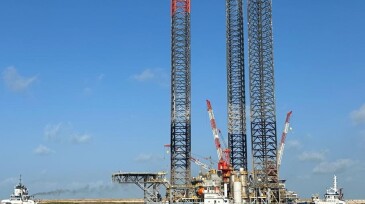
New Fortress Energy has installed the first of three jackup-based LNG units at the Altamira site.
-
The final investment decision for the 2016 discovery is expected to come in early 2024.
-
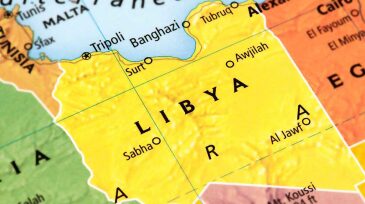
Company to revamp the platforms and facilities of the Bouri gas field offshore Libya.
-
Equinor-led project would add gas compression and electrification to the Hammerfest LNG plant.
-
Viewport3, the first UK company to be awarded the certification, uses underwater photogrammetry to inspect offshore equipment.
-
The Caspian Sea's newest platform is equipped with automation technology and will be controlled remotely from an onshore station.
-
The authors of this paper describe systems that combine fiber-optic communications for subsea control systems and downhole fiber-optic sensing systems into the same subsea optical distribution system.
-
The paper presents an overview of underwater inspection drones and identifies the necessary elements to take full advantage of the technology.