Onshore/Offshore Facilities

Despite significant progress in capturing associated gas for domestic use, Iraq remains the world’s third-largest gas-flaring country as it aims for higher oil and gas production targets.

The 2026 Upstream Scale Guidelines establish a common workflow for field measurements, scale modeling, and risk assessment to support more consistent operational decisions.

Shell has reached FID on LNG Canada Phase 2, a major expansion that will double the Kitimat facility’s LNG export capacity to 28 mtpa and strengthen long-term supply to growing Asian markets.
-
 For as long as anyone can remember, the liquid carry-over separation efficiency of 0.1 gal/MMscf has been ubiquitously specified in separator design. This article provides the most likely scenario of its evolution.
 -
The testing, inspection, and certification company is reporting a 900% rise in demand for the remote inspection of offshore assets and equipment since the outbreak of the COVID-19 pandemic.
-
The race is on to fill NWS gas export plant.
-
Two intelligence groups share similar views on how the fallout from the COVID-19 pandemic has impacted OFS companies’ valuations and operations.
-
Train 7 is scheduled for commissioning by 2024 and would bring total capacity of Nigeria LNG’s complex to 30 mtpa.
-
New LNG capacity in 2019 kept pace with higher trading volumes and supply/demand growth. Key questions and barriers still remain for the future of the LNG industry in 2020.
-
Wind turbine substructures and anchors made of special concrete would float to a site from an onshore plant.
-
The AI-driven tool will detect anomalies in subsea oil and gas infrastructure.
-
I suspect that most people’s 2022–2030 strategic planning windows have shifted. Operational and tactical plans and strategies will need to be based on a widely divergent set of assumptions.
-
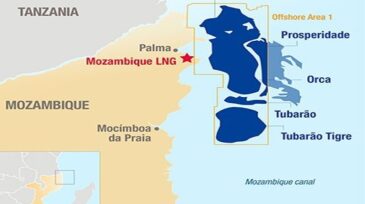
The W-Industries contract comes 2 months after Worley was awarded a master service agreement for services on the Mozambique LNG project.