Onshore/Offshore Facilities

Despite significant progress in capturing associated gas for domestic use, Iraq remains the world’s third-largest gas-flaring country as it aims for higher oil and gas production targets.

The 2026 Upstream Scale Guidelines establish a common workflow for field measurements, scale modeling, and risk assessment to support more consistent operational decisions.

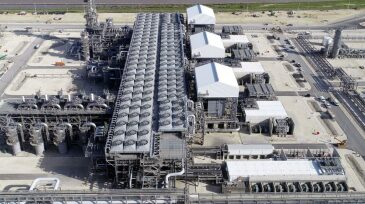
Shell has reached FID on LNG Canada Phase 2, a major expansion that will double the Kitimat facility’s LNG export capacity to 28 mtpa and strengthen long-term supply to growing Asian markets.
-
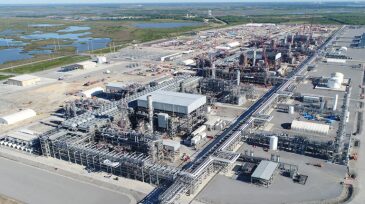
 Freeport marks the sixth major LNG export facility to start operations in the US. Commercial deliveries are expected to begin in September, with Osaka Gas and JERA taking half of the Train 1’s offtake capacity.
 -
The US EIA reports that natural gas deliveries producting LNG for export reached 6.0 Bcf/D in July. Deliveries to LNG export facilities have been the fastest growing among all natural gas consumption sectors this year.
-
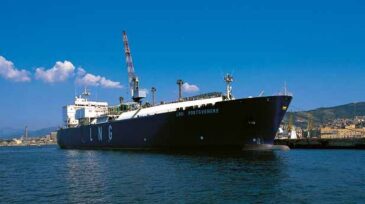
The launch will make Shenzhen Gas the second Chinese city gas distributor backed by a local government to own an LNG import facility, following Shenergy Group’s Shanghai import terminal. Eni is set to deliver an initial cargo to the facility.
-
This paper details the methodology adopted to monitor gas-pipeline leakages using distributed fiber-optic sensing, using an optical fiber as a linear sensor to provide valuable measurement information from all along the fiber itself.
-
Trafigura confirmed that it had begun shipments from the Permian to Corpus Christi via the pipeline, which has a 670,000-B/D capacity. Operator Plains All American announced last week that it had completed work on the pipeline.
-
Exports capacity has been rising for a decade and is on track to become the world leader within a year.
-
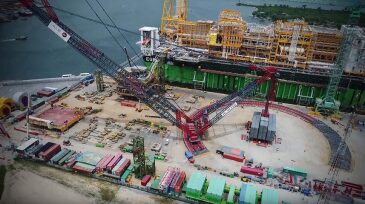
At nearly 3,000 tonnes, the company said its lift of an FPSO module was one of the heaviest land-based crane lifts ever performed. ALE was contracted to lift six modules for Total’s FPSO module integration project in Nigeria.
-
It is “one of the world’s largest greenhouse gas mitigation projects ever undertaken by industry,” Chevron said in a news release.
-
In a filing with the US FERC, Plains All American Pipeline said it would begin charging shippers an additional fee on its Cactus II pipeline to offset higher construction costs incurred in the wake of US steel tariffs.
-
The E&P company said that a reduction in its interests for projects off the coast of the West African nations should still happen by the end of this year. This includes the large Greater Tortue Ahmeyim LNG project, which is set to start up in 2022.