Onshore/Offshore Facilities

Despite significant progress in capturing associated gas for domestic use, Iraq remains the world’s third-largest gas-flaring country as it aims for higher oil and gas production targets.

The 2026 Upstream Scale Guidelines establish a common workflow for field measurements, scale modeling, and risk assessment to support more consistent operational decisions.

Shell has reached FID on LNG Canada Phase 2, a major expansion that will double the Kitimat facility’s LNG export capacity to 28 mtpa and strengthen long-term supply to growing Asian markets.
-
 Concern has been growing in the oil and gas industry about the high frequency of mooring line failures. While physical tension sensors can be difficult and costly to maintain, machine learning has shown to be a more-accurate and less-costly method for structural integrity assessment.
 -
Production from the Vaca Muerta now accounts for 23% of Argentina’s natural gas output. With only 4% of the shale play’s acreage in development, the US EIA says the country is in position to boost LNG exports in the coming years.
-
One of the company’s pipelay and construction vessels will install rigid and flexible pipelines for Equinor’s Peregrino Phase 2 project, adding an estimated 273 million bbl of recoverable oil to the field.
-
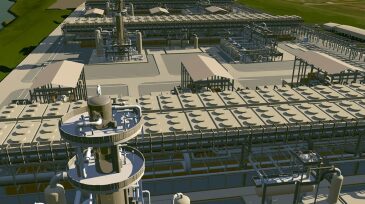
The introduction of feed gas into Train 1 of the natural gas liquefaction and LNG export facility marks the transition from construction to startup. Upon startup, Freeport LNG will become the first world-scale electric LNG liquefaction plant in North America.
-
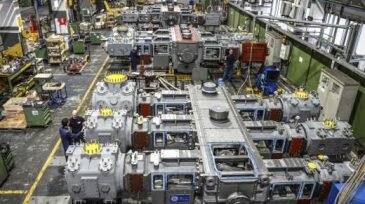
The reciprocating compression division manufactures and services compression and engine systems that are used in a variety of applications, including the transmission of natural gas across domestic and international pipelines.
-
ABS will classify a new self-elevating platform with a unique triangular monocolumn design from Calm Oceans Pte Ltd.
-
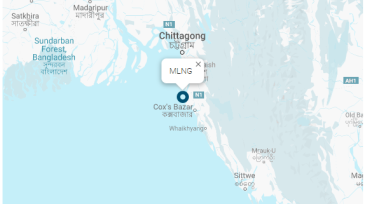
The country has scrapped plans to build additional FSRUs, and decided instead on land-based LNG as the mainstay of its energy mix
-
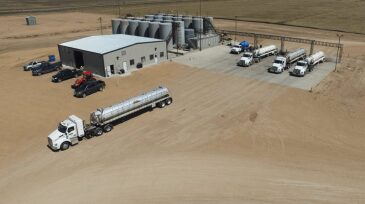
The Permian gets the lion’s share of attention when it comes to produced water, but other basins have a need to haul volumes off-site. How has the market changed in these areas recently? Is there a greater enthusiasm for pipelines, and can water midstream thrive?
-
The UK-based energy infrastructure development firm has entered an exclusivity agreement with Meridian Holdings for an FSRU project offshore northwest England. The project would include a floating FLNG receiving port.
-
Driven by Mozambique’s Area 1 and Area 4 projects, Africa is poised to become the dominant LNG investment destination by the end of this year, with the continent seeing nearly one-third of total greenfield investment.