Onshore/Offshore Facilities

The 2026 Upstream Scale Guidelines establish a common workflow for field measurements, scale modeling, and risk assessment to support more consistent operational decisions.

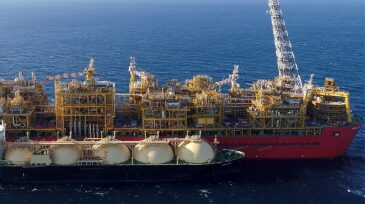
Shell has reached FID on LNG Canada Phase 2, a major expansion that will double the Kitimat facility’s LNG export capacity to 28 mtpa and strengthen long-term supply to growing Asian markets.

The long-term outlook analysis says a potential shift toward new construction could push 2026 production 3% above 2025 levels.
-
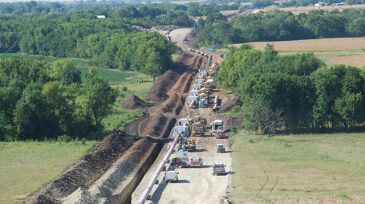
 A decision by the US District Court in Montana deals a blow to the TransCanada project, which is designed to transport heavy crude from Alberta to Nebraska.
 -
API released an updated valve standard for wellhead and tree equipment, which includes new automatic closure requirements.
-
Imperial Oil has made a final investment decision on its 75,000-B/D Aspen oil sands project, the first new oil sands development to be approved in 5 years.
-
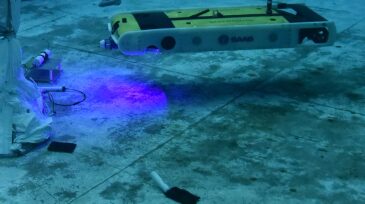
ROVs dominate the world of subsea inspections, maintenance, and repair, but as operators work in a post-downturn economy, autonomous systems have become more in demand. Autonomous inspections are possible today, but how can they help with light and heavy intervention?
-
DNV estimates that gas will be the world’s primary energy source by the mid-2020s. Growth in LNG capacity is expected as the midstream sector invests in connecting shifting sources of gas with changing demand centers. Other factors also will drive the globalization of gas trading markets.
-
Remote condition monitoring of offshore platform equipment tracks performance data, watching for deviations from baseline benchmarks. Unexpected variances can be investigated and serviced by technicians dispatched to target the root causes—an approach called condition-based maintenance.
-
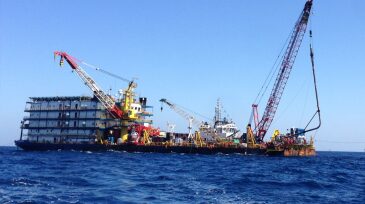
As part of a 2-year deal, the Kreuz Glorious will help with the inspection of offshore jackets in the Arabian Sea. Kreuz will also provide personnel for project management and offshore construction.
-
Offshore production assurance continues to drive new production technology applications and approaches. The three papers highlighted here focus on developing analytical tools and performing root-cause analyses while providing safe, cost-effective, and reliable operations.
-
In this paper, past gas-cycling operations were examined to identify subsurface implications and effects on operability aspects for the Arun giant gas field offshore Indonesia in the North Sumatra Basin.
-
This paper evaluates potential causes of failure for nine pipelines operating in shallow waters (8 to 14 m) in the Gulf of Guinea. The authors develop an analytical method to identify root causes and provide recommendations for pipeline design and placement.