Onshore/Offshore Facilities
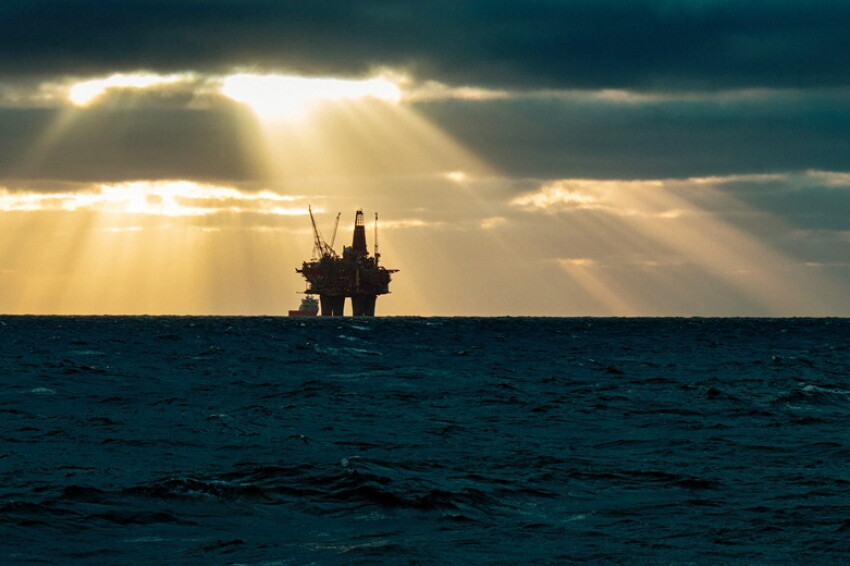
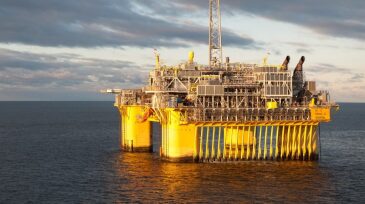
This paper identifies opportunities and risks associated with repurposing an offshore oil and gas platform for green hydrogen production. Various technical scenarios were investigated for the case study platform, and their profitability was determined using economic calculations. In addition, all the submodels were compared with standard decommissioning costs for reco…

This paper presents a flexible, highly cost- and energy-efficient method of gas separation and CO₂ capture from many different gas mixtures with a large range of CO₂ concentrations.

This work introduces a novel predictive methodology combining historical metocean data with real-time riser analysis for shallow water dynamically positioned rig operations.
-
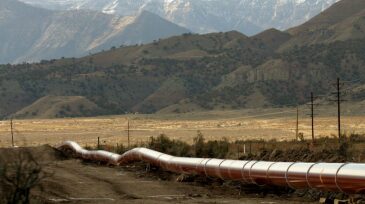
 The federal agency now charged with overseeing cybersecurity for US pipelines is ill equipped to do the job, say two top regulators who want the role given to the Energy Department.
 -
Since 9/11, no new rules or regulations have been promulgated to address pipeline or liquified natural gas facility security. Although the Transportation Security Administration recently released an updated version of its "Pipeline Security Guidelines," those guidelines remain advisory.
-
By transitioning from gas turbines to land-based electrical power for various platforms, the company hopes to reduce carbon dioxide emissions by more than 600,000 tonnes/year.
-
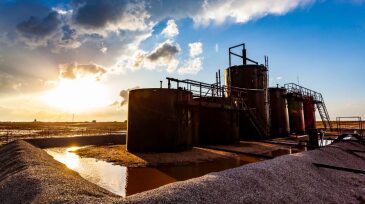
As oil production grows by millions of barrels in the Permian, so does the water. A report from Wood Mackenzie offers an estimate of the cost and who will be affected most.
-
The offshore gas pipeline will connect the gas markets of Finland and Estonia, enabling integration with the European Union’s common energy market
-
The JIP aims to bring to market a single-phase subsea boosting system that does not require barrier fluid or a mechanical seal.
-
An increasingly buzzy term tossed around at industry events, “digital twin” is leveraging data analytics, machine learning, and artificial intelligence to improve efficiencies from design to decommissioning.
-
When a new horizontal well in Asia was incapable of unassisted flow, coiled tubing (CT) was selected for the perforation and stimulation intervention. Mechanical isolation was required to ensure that the stimulation fluids entered only the new zones.
-
This paper presents work performed to characterize the probability of collapse as a function of reservoir-abandonment pressure using reliability-based design (RBD).
-
A probabilistic approach was introduced to improve interpretation of data from electromagnetic corrosion logs. This paper presents a statistical risk-based approach to predicting casing leaks using electromagnetic corrosion logs.