Onshore/Offshore Facilities

As the pace of new discoveries slows and high-quality prospects become harder to find, oil companies may need to rely more heavily on mature fields to maintain production and support future supply.

With confidence in subsea boosting performance growing, BP is incorporating pumping systems into both greenfield developments and brownfield expansions.

This paper presents an approach for safe, efficient, and cost-effective legacy well reabandonment.
-
 The $206 million deal for the fields offshore Trinidad and Tobago is expected to close in the third quarter of 2025.
 -
The revised report provides upstream oil and gas operators with a framework and guidelines to help select and deploy methane emissions detection and quantification technologies.
-
Assets include regasification and power generation facilities along with associated pipelines.
-
The agreement allows BP to maintain control over its stake in the TANAP pipeline, which transports gas from the Caspian Sea to Europe through Turkey, while unlocking nearly $1 billion in capital as part of its divestment program.
-
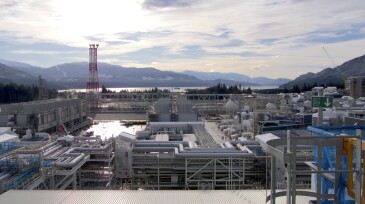
Cooldown cargo is set to be delivered to Kitimat, BC, from Australia in early April, the final step prior to official startup.
-
Argentina’s YPF forecasts the $3 billion oil pipeline and export terminal will carry 180,000 B/D when it goes onstream in 2026.
-
The Louisiana contractor is buying Kystdesign for an undisclosed sum, expanding its underwater vehicle business.
-
The agreement aims to bring the efforts of both companies together to advance digital-enabled carbon-free floating power generation.
-
The Halten East project in the Norwegian Sea involves fields that if developed independently would be considered too marginal to be economically attractive.
-
The production unit for the Balder field in the North Sea is expected to go on-stream in the second quarter of 2025 following the staged tow-out of the FPSO.