Onshore/Offshore Facilities

As the pace of new discoveries slows and high-quality prospects become harder to find, oil companies may need to rely more heavily on mature fields to maintain production and support future supply.

With confidence in subsea boosting performance growing, BP is incorporating pumping systems into both greenfield developments and brownfield expansions.

The legacy of per- and polyfluoroalkyl substances (PFAS) is a persistent problem in many industries, including upstream oil and gas. In this Q&A, remediation expert Grant Scott presents the trouble with these “forever chemicals” and the mitigating efforts being used.
-
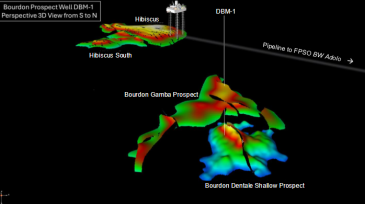
 Discovery yields the largest hydrocarbon column to date in the Dussafu Marin license offshore Gabon.
 -
Technology and partnerships play a pivotal role in how the oil industry finds and produces energy from frontier regions and brownfields, both now and in the future.
-
This article is the second of a two-part series on produced-water management in the Gulf of Mexico and covers four themes: equipment, process configuration, operations, and effluent quality.
-
The proposed joint venture aligns with Eni's satellite model strategy to create entities that manage operations and access capital markets separately from the parent company.
-
Mero expects to increase its production capacity to over 700,000 B/D.
-
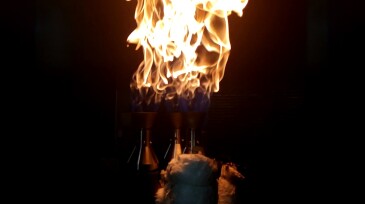
The new burner, created with the help of machine learning and additive manufacturing, promises high methane destruction efficiency and combustion stability even in windy conditions.
-
Updates about global exploration and production activities and developments.
-
Discovered in 2010, the Búzios field offshore Brazil achieved a new milestone with the installation of its sixth production facility.
-
Key drivers of the rapid growth projection include Asia’s economic outlook and the rise of artificial intelligence.
-
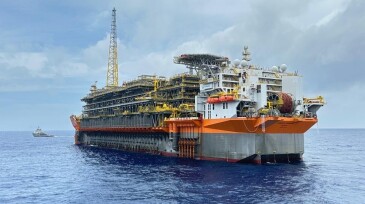
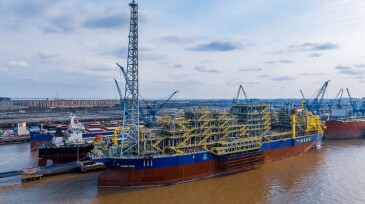
The floating production, storage, and offloading vessel is the first in the world with a postcombustion carbon capture pilot system.