Onshore/Offshore Facilities

With confidence in subsea boosting performance growing, BP is incorporating pumping systems into both greenfield developments and brownfield expansions.

The legacy of per- and polyfluoroalkyl substances (PFAS) is a persistent problem in many industries, including upstream oil and gas. In this Q&A, remediation expert Grant Scott presents the trouble with these “forever chemicals” and the mitigating efforts being used.

As the pace of new discoveries slows and high-quality prospects become harder to find, oil companies may need to rely more heavily on mature fields to maintain production and support future supply.
-
 COP28’s “last in, last out” approach lets developing countries profit from oil and gas now to invest later in a clean energy future.
 -
Republicans have been raising concerns for weeks about a possible administration clampdown on natural gas exports. Now that it’s official, expect the congressional pushback to intensify.
-
The contractor was tapped by Offshore Frontier Solutions to provide electrical systems and associated digital solutions for ExxonMobil’s fifth FPSO in the region.
-
In a sale agreement valued at $2.4 billion, Shell will move on from its Niger Delta upstream business which it has operated since 1979.
-
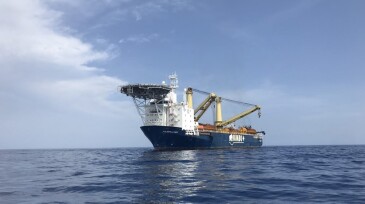
Heavy-lift and installation specialists will pre-install a mooring spread for upcoming Stabroek block FPSO.
-
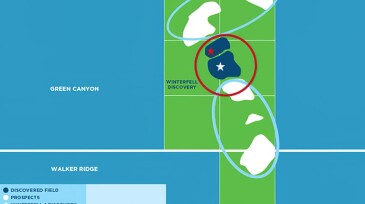
The 100 million BOE-plus find will be tied back to the Heidelberg spar.
-
The Ksi Lisims floating LNG facility is planned to be the world's lowest emission-intensity LNG facility and net-zero ready by 2030.
-
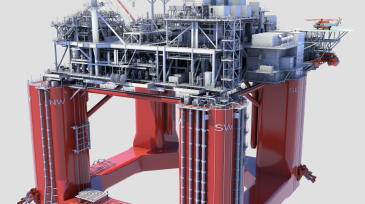
Woodside Energy's Trion field offshore Mexico features a four-column semisubmersible FPU with a production capacity of 100,000 BOPD.
-
The producer’s Lime Rock and Venice discoveries were brought on stream in late December.
-
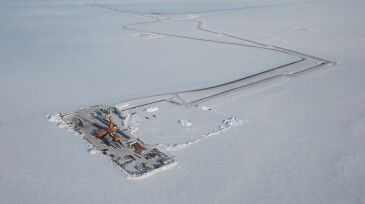
Located in the National Petroleum Reserve in Alaska, the Willow project is estimated to produce 180,000 BOPD at its peak.