Onshore/Offshore Facilities

This paper identifies opportunities and risks associated with repurposing an offshore oil and gas platform for green hydrogen production. Various technical scenarios were investigated for the case study platform, and their profitability was determined using economic calculations. In addition, all the submodels were compared with standard decommissioning costs for reco…

This paper presents a flexible, highly cost- and energy-efficient method of gas separation and CO₂ capture from many different gas mixtures with a large range of CO₂ concentrations.

This paper introduces channel stacking, a novel and efficient methodology designed to significantly improve optical gas imaging-based leak detection.
-
 Total’s $5.1-billion Lake Albert development with CNOOC brings Uganda into the club of oil-producing nations while it positions the French major as the dominant player in African oil and gas.
 -
The Sakaka solar plant, the country’s first large-scale renewable-energy project, is planned as the first of eight such projects.
-
This paper presents a field trial that compares multiple methane detection and quantification methods and compares the measurements with engineering estimates of emissions.
-
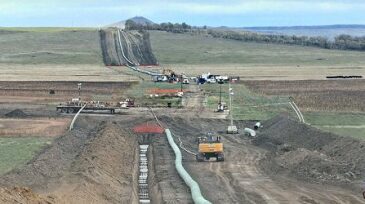
The US Army Corps of Engineers deferred any decision to shut the line back to the district court.
-
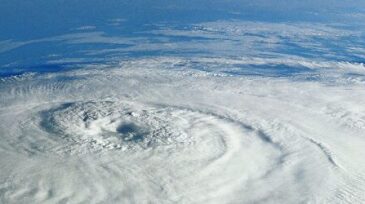
Forecasters are predicting the sixth ‘above-average’ Atlantic storm season in a row.
-
The organization has published new procedures designed to provide the required safety level in transporting CO2 by pipelines and strengthen the development of carbon capture and storage projects.
-
The honorees will be recognized later this year at the OTC Distinguished Achievement Awards Luncheon.
-
Duo launches center of excellence aimed at promoting and expanding nonmetallic materials’ role in construction.
-
A demonstrator showcasing the potential of the technology is scheduled to come on line in late 2023.
-
The paper describes the steps that have already been taken to create an industry-wide group that includes operators, class regulators, and service providers to agree on the primary challenges and to encourage development of practical solutions in a cost-efficient way.