Onshore/Offshore Facilities

The supermajor said the fields are not expected to contribute meaningfully to its production profile by 2030.

This paper reviews a proof-of-concept project in which surplus casing pipes were used in the fabrication of purposefully designed artificial reef structures for the enhancement of biodiversity and commercial fisheries.

This paper presents a study that confirms glass-reinforced-epoxy-lined tubing as a reliable, cost-effective solution for long-term water-injection service in moderate-salinity offshore environments.
-
 Using a new model, the federal agency said deepwater operations will drive the region's production to 1.9 million B/D next year.
 -
Chevron CEO Mike Wirth urges more optimistic and balanced conversations regarding the energy transition.
-
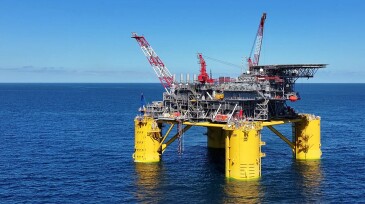
The field's massive FPSO is anchored in place and on schedule for first oil prior to year-end.
-
Accuracy, complexity, costs, and skills availability may make it difficult to get the most out of digital twins and even potentially misrepresent or miss actual changes in the status of systems or facilities.
-
The updated plan seeks to avert termination of the PSA by raising total investment and constructing a floating production unit at Aphrodite plus an export pipeline to Egypt.
-
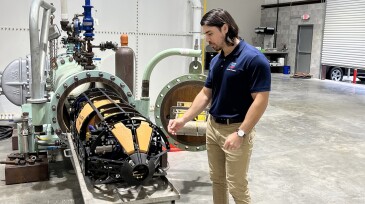
The traditional method of inspecting tanks puts workers in danger. Using robots instead can keep workers out of harm’s way.
-
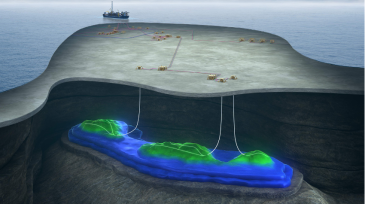
Subsea tieback in the Central North Sea expected to produce 20,000 BOED at peak, boosting output to Alvheim FPSO.
-
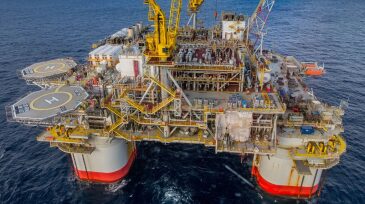
The two projects at the Jack/St. Malo and Tahiti deepwater facilities are expected to recover millions of additional barrels of oil equivalent.
-
Offshore wind power involves generating electricity from wind farms located at sea. Because wind speeds are generally higher offshore than on land, these farms produce more electricity for the same amount of installed capacity. Both wind and solar energy are renewable and do not emit carbon, which helps reduce dependence on fossil fuels such as oil and gas.
-
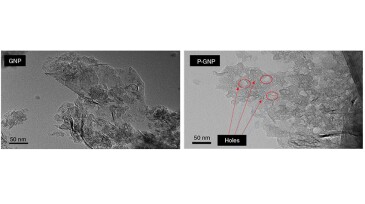
This study proposes graphene nanoplatelets as a preflush system to extend the lifetime of a conventional scale-inhibitor squeeze treatment.