Onshore/Offshore Facilities

The Absheron gas field expansion will supply additional natural gas to Azerbaijan’s domestic market and support its export commitments to Turkey, allowing Baku to stay focused on meeting its gas export obligations to Europe.
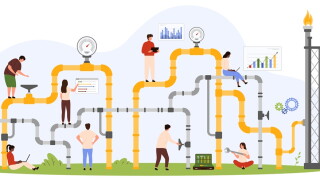
A credible custody-transfer record depends on far more than the accuracy of a single meter. It is the product of an integrated measurement chain. While meter performance supports measurement-system integrity, commercial confidence also depends on traceability, governance, and authorization.

Despite significant progress in capturing associated gas for domestic use, Iraq remains the world’s third-largest gas-flaring country as it aims for higher oil and gas production targets.
-
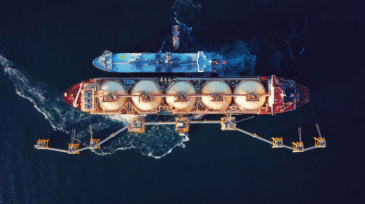
 The authors describe a process study to identify the potential causes of flaring during LNG offtake and corrective measures to accomplish zero flaring without capital plant modification.
 -
This paper examines the technical, strategic, and commercial benefits of barge liquefied-natural-gas technology in deepwater and onshore gas developments.
-
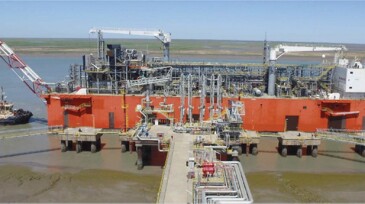
The offshore plant is expected to produce up to 2.8 mtpa in early 2023.
-
The newbuild vessel will be used in partnership with Kirby Offshore Wind on the Empire wind farm off New York.
-
Reservoir's permeability prompted a lower peak production estimate at deepwater field.
-
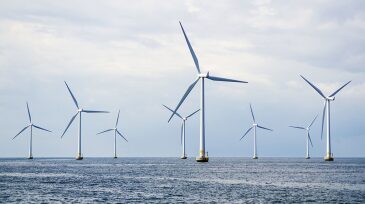
The US BOEM will hold its second offshore wind energy auction in May and promises more will follow.
-
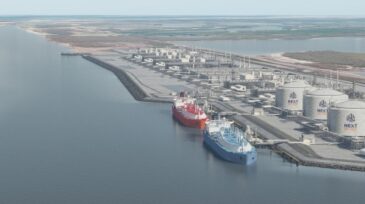
Anticipating making a final investment decision later this year, NextDecade made a 20-year deal with Guangdong Energy Group Natural Gas Co. to be supplied from its Rio Grande LNG export project.
-
A transatlantic task force will be formed to oversee the EU’s goal of reducing Europe’s dependence on Russian fossil fuels and strengthen European energy security.
-
This paper presents the development and test of a method to predict upstream events that could lead to flaring, applying an integrated framework using machine-learning and big-data analytics.
-
A field test conducted by Yokogawa Electric and JSR resulted in a chemical plant being run autonomously for the first time by artificial intelligence for 35 days.