Onshore/Offshore Facilities

The Absheron gas field expansion will supply additional natural gas to Azerbaijan’s domestic market and support its export commitments to Turkey, allowing Baku to stay focused on meeting its gas export obligations to Europe.
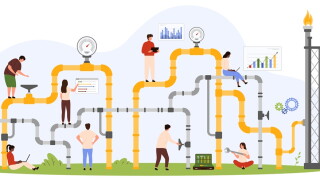
A credible custody-transfer record depends on far more than the accuracy of a single meter. It is the product of an integrated measurement chain. While meter performance supports measurement-system integrity, commercial confidence also depends on traceability, governance, and authorization.

Despite significant progress in capturing associated gas for domestic use, Iraq remains the world’s third-largest gas-flaring country as it aims for higher oil and gas production targets.
-
 The agreement allows BP to maintain control over its stake in the TANAP pipeline, which transports gas from the Caspian Sea to Europe through Turkey, while unlocking nearly $1 billion in capital as part of its divestment program.
 -
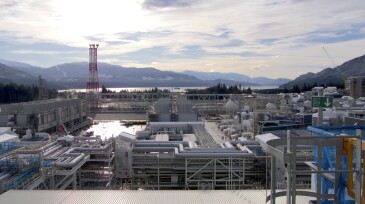
Cooldown cargo is set to be delivered to Kitimat, BC, from Australia in early April, the final step prior to official startup.
-
Argentina’s YPF forecasts the $3 billion oil pipeline and export terminal will carry 180,000 B/D when it goes onstream in 2026.
-
The Louisiana contractor is buying Kystdesign for an undisclosed sum, expanding its underwater vehicle business.
-
The agreement aims to bring the efforts of both companies together to advance digital-enabled carbon-free floating power generation.
-
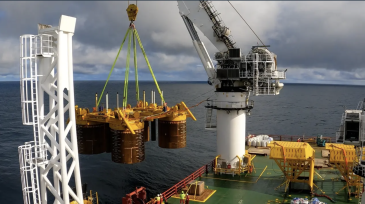
The Halten East project in the Norwegian Sea involves fields that if developed independently would be considered too marginal to be economically attractive.
-
The production unit for the Balder field in the North Sea is expected to go on-stream in the second quarter of 2025 following the staged tow-out of the FPSO.
-
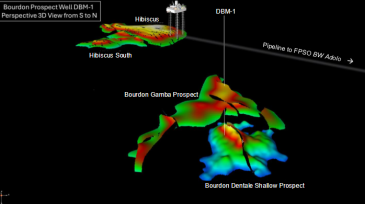
Discovery yields the largest hydrocarbon column to date in the Dussafu Marin license offshore Gabon.
-
Technology and partnerships play a pivotal role in how the oil industry finds and produces energy from frontier regions and brownfields, both now and in the future.
-
This article is the second of a two-part series on produced-water management in the Gulf of Mexico and covers four themes: equipment, process configuration, operations, and effluent quality.