Onshore/Offshore Facilities

Argentina’s President Javier Milei met with TotalEnergies CEO Patrick Pouyanné and Eni CEO Claudio Descalzi in Paris to discuss Argentina’s energy sector, including projects linked to the Vaca Muerta shale formation and the development of the Argentina LNG export project.

The Absheron gas field expansion will supply additional natural gas to Azerbaijan’s domestic market and support its export commitments to Turkey, allowing Baku to stay focused on meeting its gas export obligations to Europe.

A credible custody-transfer record depends on far more than the accuracy of a single meter. It is the product of an integrated measurement chain. While meter performance supports measurement-system integrity, commercial confidence also depends on traceability, governance, and authorization.
-
 As companies look to reduce the time it takes to inspect a subsea pipeline, as well as the costs involved in the operation, autonomous systems have become a more desirable option. How close are they to becoming the norm?
 -
Citing shipping data from Bloomberg Finance, the US EIA estimates that LNG exports set consecutive records in October and November 2019. Through the first 11 months of the year, US LNG exports have gone up 61% from their 2018 annual average.
-
With production set to begin from the large Leviathan field by the end of this year, the Israeli government signed off on the final permits to allow for its first exports. Leviathan contains approximately two-thirds of all the gas resources discovered offshore Israel so far.
-
As part of the contract, Wood will provide the topside modifications needed for the Snorre A and Gullfaks A platforms to integrate the Hywind floating wind park with existing systems powering the facilities. The platforms will be the first to receive electric power from floating wind turbines.
-
First steel has been cut for the minimum facilities wellhead platform for the Apsara field offshore Cambodia, the country’s maiden oil development. Operator KrisEnergy said production is scheduled to begin in the first half of 2020.
-
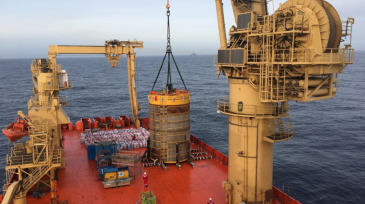
InterMoor will support Neodrill with project execution, installation services, and business development of its conductor anchor node technology.
-
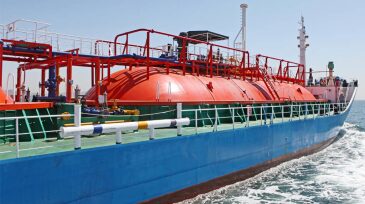
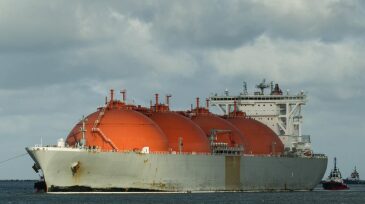
Bahri, Saudi Arabia's national shipping carrier, is looking into chartering as many as 12 LNG tankers starting in 2025, according to a new Reuters report. The EOI may be part of Saudi Aramco's expansion into LNG trading.
-
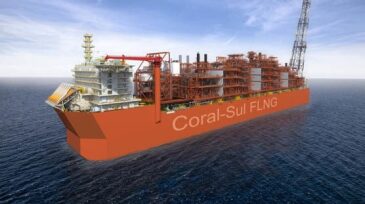
The Eni-operated project will be the first FLNG vessel deployed in a deepwater field offshore the African continent upon its projected 2022 startup. Samsung Heavy Industries completed the operation at its shipyard in Geoje, South Korea.
-
GTT has signed a technical assistance and license agreement with Chinese shipyard Wison Offshore and Marine. The agreement largely covers GTT’s membranes for FLNG and FSRU vessels, floating storage regasification power units, and LNG carriers. Under the terms of the agreement, the two companies will expand their offers to ship owners and target new markets, with a par…
-
Rovco’s stereo camera technology system sends images and 3D models of assets from the seabed to computer browsers in any location, offering users instantaneous access to information during inspection or construction.