Onshore/Offshore Facilities

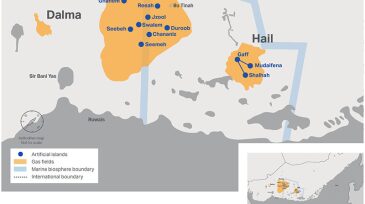
The Absheron gas field expansion will supply additional natural gas to Azerbaijan’s domestic market and support its export commitments to Turkey, allowing Baku to stay focused on meeting its gas export obligations to Europe.
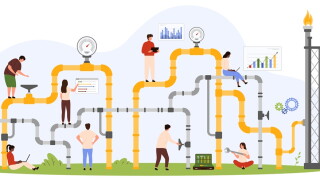
A credible custody-transfer record depends on far more than the accuracy of a single meter. It is the product of an integrated measurement chain. While meter performance supports measurement-system integrity, commercial confidence also depends on traceability, governance, and authorization.

Despite significant progress in capturing associated gas for domestic use, Iraq remains the world’s third-largest gas-flaring country as it aims for higher oil and gas production targets.
-
 Projects in the running include one each from Nigeria, Saudi Arabia, and Guyana.
 -
Although 2022 did not match 2021’s record of over 19.5 GW of online capacity, 2022 witnessed the second highest amount of global online capacity with almost 8.5 GW. Final investment decisions (FIDs) were taken on over 11.5 GW of projects, making it the fourth highest year for FIDs.
-
The $80-million preconstruction services agreement covers onshore facilities of massive, multibillion-dollar sour-gas development.
-
The North Sea's largest producing field has shut in about a quarter of its total production capacity as repairs are made to faulty equipment.
-
With growing trade of liquefied natural gas (LNG), an increased diversification of LNG supply sources may occur in the LNG tanks as different compositions of LNG are stored in the tanks. It is the primary concern in terms of assuring stability and safety in LNG storage.
-
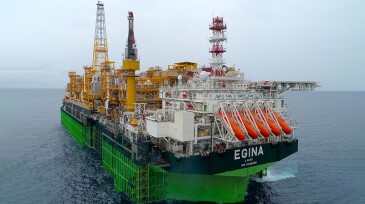
The French operator will tie satellite field back to existing FPSO, with first oil expected in around 2 years.
-
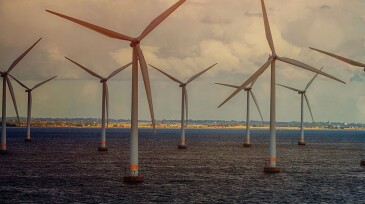
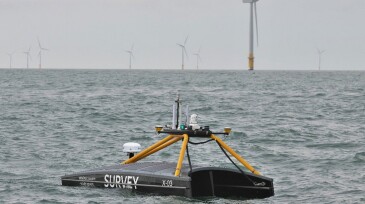
Energy firm Vattenfall has conducted large-scale seabed surveys with uncrewed surface vessels. The company reports positive results, from both climate and safety aspects.
-
Proposed energy projects needing US federal permits will come under increased scrutiny related to the scope and magnitude of potential emissions.
-
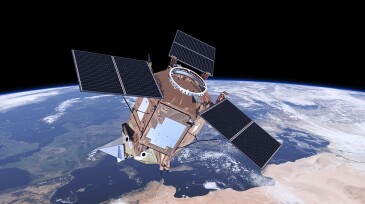
Satellite imaging of methane emissions offers the fossil fuel industry the empirical data it needs to fix problems that companies might not even know they have before the EPA starts to levy fines in 2024.
-
The authors of this paper describe a software technology that balances calculated well-integrity risk with the associated financial impact for an entire integrity-surveillance program.