Onshore/Offshore Facilities

The supermajor said the fields are not expected to contribute meaningfully to its production profile by 2030.

A circular economy emphasizes reducing, reusing, recycling, and removing parts of existing systems to optimize them with respect to resource utilization. The following papers demonstrate how these pillars of a circular economy are enabling operators all over the world.
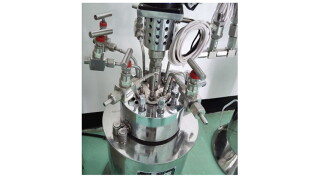
This study aims to systematically assess casing integrity and corrosion risks associated with CO2 injection in oil-recovery operations.
-
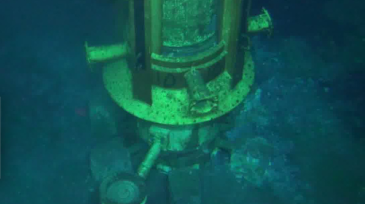
 The Swiss-based company Hydromea announced advances in underwater optical modem technology and development of an underwater monitoring system capable of daily data sweeps remotely.
 -
Cash from the Japanese transport specialists will be used to bring Deflin FLNG vessels to FID.
-
Woodside Energy awards all contracts for major work at multiple fields, while Helix Energy secures significant plugging and abandonment job on the Gulf of Mexico shelf.
-
The authors describe coiled tubing operations that used a riser on a monohulled vessel already performing riserless interventions.
-
With global decommissioning activities forecast to reach $100 billion through 2030, early planning for it could go far in helping to minimize risk and associated costs.
-
Production from the Dover field is expected to start in late 2024 or early 2025.
-
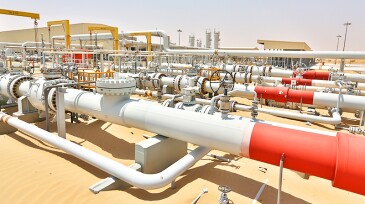
Sustaining two of the UAE’s biggest onshore fields will require hundreds of kilometers of new pipelines that are to be powered using 100% renewable energy.
-
The second phase of the project will analyze data gathered in Phase 1, with the goal of improving riser, wellhead, and conductor fatigue estimates.
-
Production from the offshore project now represents the equivalent of 7% of European oil consumption.
-
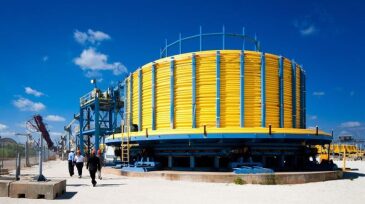
The deal covers the supply of more than 50 km of dynamic and static subsea umbilicals.