Pipelines/flowlines/risers

This work introduces a novel predictive methodology combini ang historical metocean data with real-time riser analysis for shallow water dynamically positioned (DP) rig operations, addressing a gap in industry literature. The integrated approach of predictive nonproductive-time (NPT) estimation, real-time monitoring validation, and structured decision protocols for cr…

The deals, with a potential value exceeding $3.7 billion, are aimed at strengthening Saudi Aramco’s supply chains and expanding its use of industrial artificial intelligence.

ExxonMobil and its Area 4 partners have awarded $1.1 billion in pre-investment contracts for long-lead upstream equipment supporting Mozambique's Rovuma LNG project. The awards, led by OneSubsea, mark a key step toward FID as development advances on ExxonMobil's largest global investment.
-
 This paper details the methodology adopted to monitor gas-pipeline leakages using distributed fiber-optic sensing, using an optical fiber as a linear sensor to provide valuable measurement information from all along the fiber itself.
 -
Trafigura confirmed that it had begun shipments from the Permian to Corpus Christi via the pipeline, which has a 670,000-B/D capacity. Operator Plains All American announced last week that it had completed work on the pipeline.
-
In a filing with the US FERC, Plains All American Pipeline said it would begin charging shippers an additional fee on its Cactus II pipeline to offset higher construction costs incurred in the wake of US steel tariffs.
-
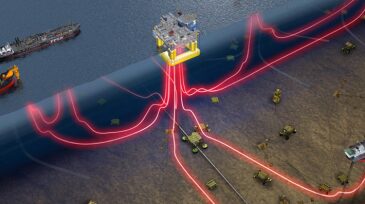
A new enabling technology known as electrically heat-traced flowline (EHTF) will be used to enable system startup and shutdown and to maintain production fluids outside of the hydrate envelope during steady-state operation.
-
Concern has been growing in the oil and gas industry about the high frequency of mooring line failures. While physical tension sensors can be difficult and costly to maintain, machine learning has shown to be a more-accurate and less-costly method for structural integrity assessment.
-
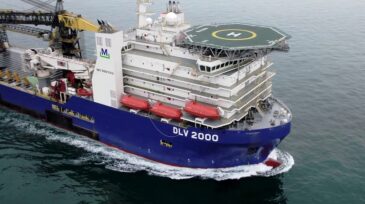
One of the company’s pipelay and construction vessels will install rigid and flexible pipelines for Equinor’s Peregrino Phase 2 project, adding an estimated 273 million bbl of recoverable oil to the field.
-
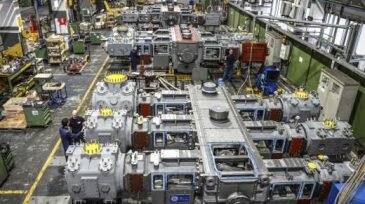
The reciprocating compression division manufactures and services compression and engine systems that are used in a variety of applications, including the transmission of natural gas across domestic and international pipelines.
-
Completion comes despite two cyclones disrupting the project area during installation, McDermott said.
-
Exponential thinking is called the “exponential surprise factor.” These underpinnings are observed on the tubular mechanics side also through data analytics, machine learning, artificial intelligence, and cognitive processes.
-
The criticality of above-water riser hull piping requires frequent inspections. Traditional manual inspection methods present safety and efficiency concerns, but work is being done to see if robotic technologies—such as drones and crawlers—can do the job as good as, or even better than, humans.