Production

The 2026 Upstream Scale Guidelines establish a common workflow for field measurements, scale modeling, and risk assessment to support more consistent operational decisions.

The long-term outlook analysis says a potential shift toward new construction could push 2026 production 3% above 2025 levels.

Lower operating expenditures and a changing asset mix helped UKCS operators cut average production costs by 9% year over year, despite relatively flat production levels, according to the NSTA.
-
 This paper addresses the challenges of integrating huge amounts of data and developing model frameworks and systematic workflows to identify opportunities for production enhancement by choosing the best candidate wells.
 -
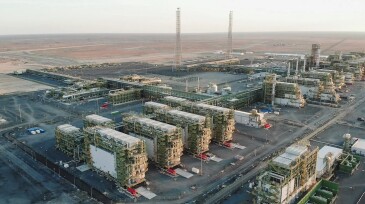
The $48.5-billion investment aims to keep the 30-year-old project in western Kazakhstan flowing for years to come.
-
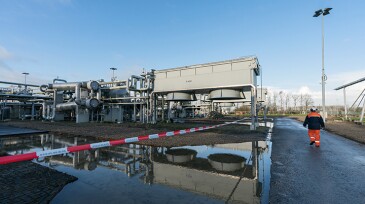
Dutch leaders have voted to halt all future production from the large gas field due to seismic activity linked to extraction operations.
-
The index integrates three independent components extracted from static and dynamic parameters: reservoir permeability thickness, movable gas, and reservoir pressure from a historically matched dynamic model.
-
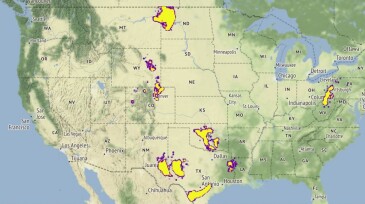
Supervised learning was used to develop an ensemble of models that account for historical production data, geolocation parameters, and completion parameters to forecast production behavior of oil and gas wells.
-
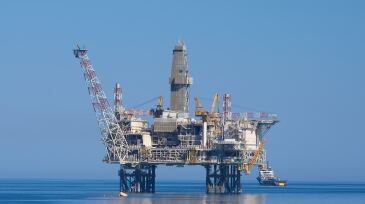
The $6-billion Azeri Central East (ACE) platform is the first BP-operated offshore production facility controlled from onshore.
-
The new vessels bring QatarEnergy’s fleet to 104 as the company ramps up production with its North Field expansion.
-
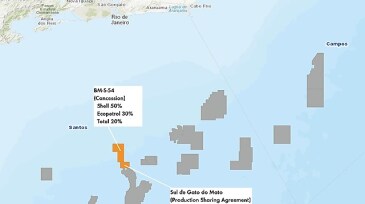
Contractor will design FPSO hull and related topsides facilities for the project located in the Santos Basin offshore Brazil
-
The world's largest oilfield service company made the deal to expand its exposure to the less cyclical production segment of the upstream business.
-
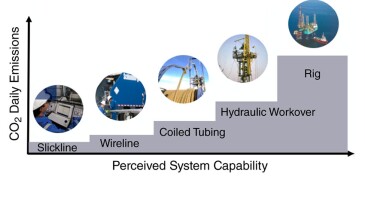
The authors challenge the traditional planning and execution of interventions, both from an operational and commercial standpoint, and examine where room exists for significant improvement in the industry