Reservoir

This case study describes how edge computing and industrial internet of things platforms were deployed to automate and optimize production operations across four distinct basins.
Output is rising fast in the South American shale play and putting Argentina on a course to soon reach 1 million B/D.

This case study presents a procedure in which the operator compared production from wells with adjusted wettability to a control group, finding that the adjustments resulted in significant improvements in production and reductions in produced water.
-
 In this paper, the effect of cold-water injection on pressure transient analysis (PTA) of geothermal reservoirs is studied by varying the temperature of the injected cold water from room temperature to reservoir temperature.
 -
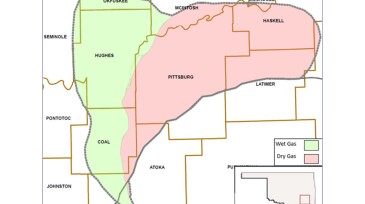
This paper describes an effort to use multiple technologies to better understand an Arkoma Basin reservoir and the interdisciplinary relationship between the reservoir’s subsurface hazards and a stimulation treatment.
-
The authors of this paper describe a seismic reprocessing campaign for an Egyptian oil field that had yielded poor seismic data.
-
This paper describes a method with multitiered analysis to leverage machine-learning techniques to process passive seismic monitoring data, pumping and injection pressure, and rate for fracture and fault analysis.
-
The main objective of this paper is to investigate the relationship between strain change and pressure change under various fractured reservoir conditions to better estimate conductive fractures and pressure profiles.
-
Chevron has some new ideas on how to get more oil for less cost out of shale wells in their early years.
-
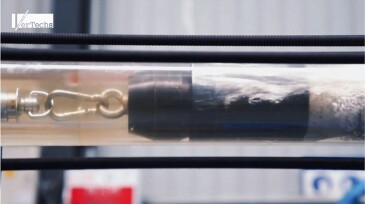
Casing deformations are common in the south-west shale regions of China and the Middle East, where the widespread use of 5.5-in., 26- and 26.8-lb/ft casing is the norm. In these regions, the majority of frac plugs are designed with an outer diameter (OD) of 4.055 in. or slightly larger, which frequently encounter restrictions resulting in the loss of bottomhole assemb…
-
Executives from BKV Corp. share why the mid-sized natural gas producer is diving headfirst into carbon sequestration projects and why you should too.
-
Recent technical papers have further shown the steady increase in the application of advanced seismic techniques and machine learning to mature to production “stranded” and “advantaged” hydrocarbon-bearing accumulations ; improve carbon capture, storage, and leak detection; and analyze naturally and artificially fractured reservoirs.
-
Well testing has enjoyed a recent uptick in activity and interest as operators continually realize the value in understanding and monitoring the dynamic performance of their reservoirs.